Tools We Use
Choose the tool for the work. These notes bring together our existing tool guides, reviewed crew standards and actual tool photographs.
Start with the personal kit and shared crew equipment. This page adds a quick route to each group.
Miter Saws
DeWalt miter saws are the crew's main cutting stations for baseboard, casing and crown. The DWS779 shown in our tool records is one verified model. Dave also confirms a move toward battery miter saws; a specific battery model is not named here until it is verified.
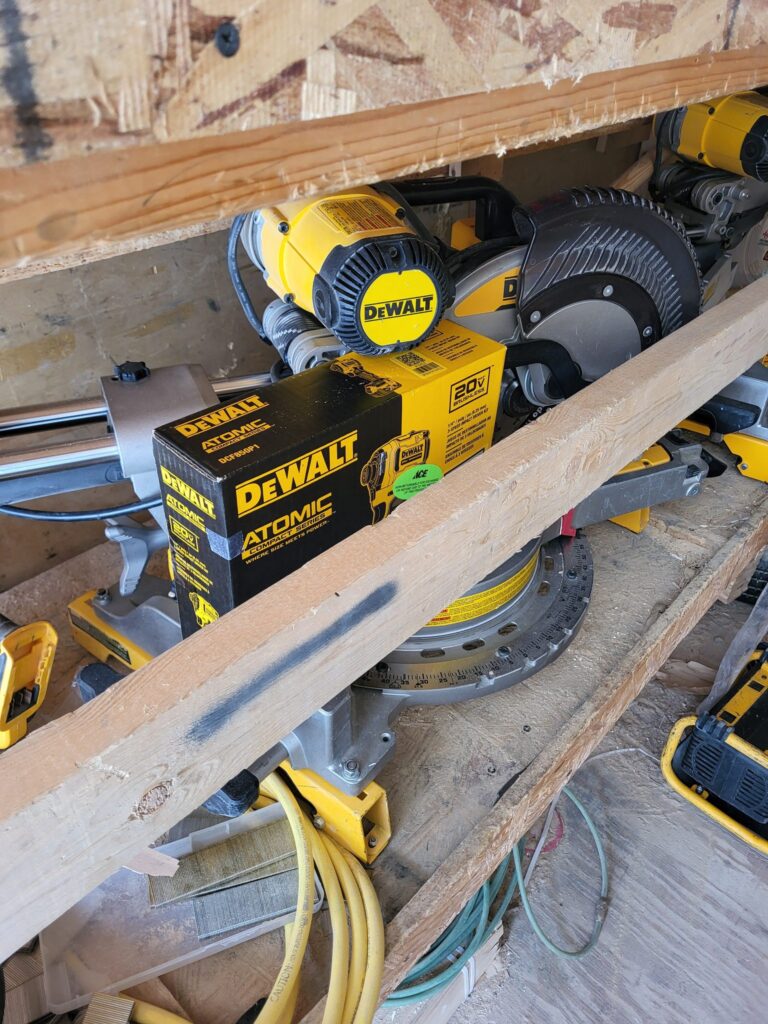
Cut factory ends clean before fitting trim. Support long stock and follow the saw's instructions for its blade, guards and capacity.
Brad & Finish Nailers
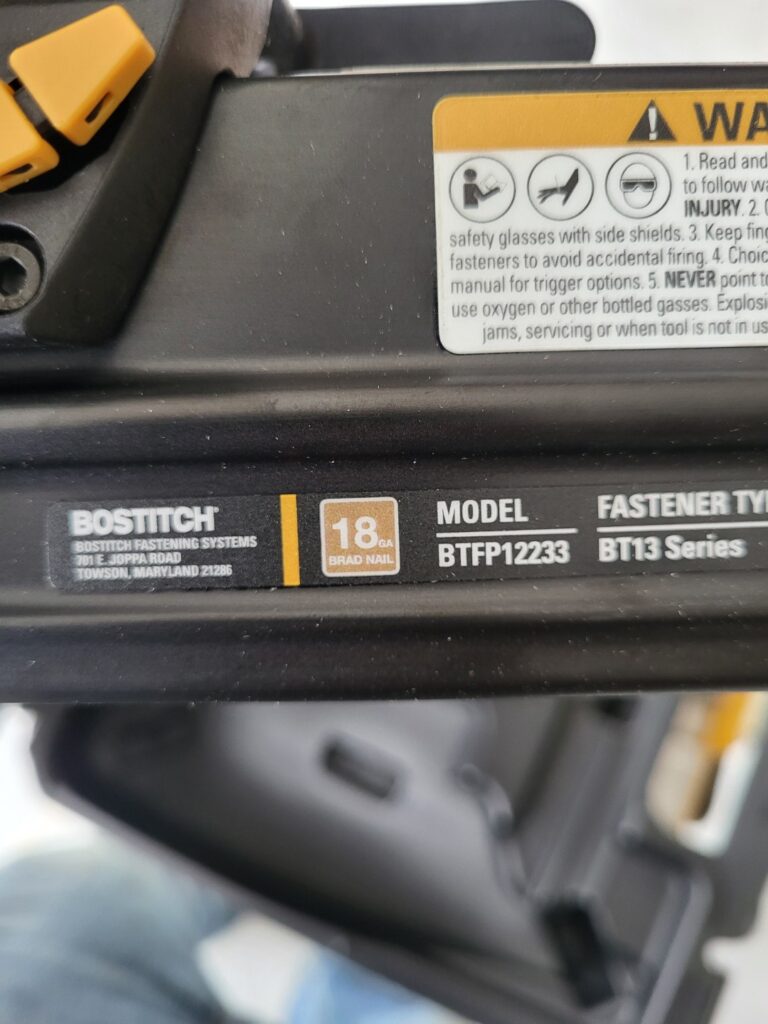
Bostitch is the main pneumatic lineup, with DeWalt and Metabo HPT also in the reviewed kit. The photograph confirms the Bostitch BTFP12233 18-ga brad nailer.
- 15-ga finish: door jambs, closets, cleats and heavier stock.
- 18-ga brad: general trim and delicate edges; the default when a guide simply calls for finish nails.
- 23-ga pin: small returns and delicate pieces.
- 1/4-inch crown stapler: cabinet backs and thin stock, where the guide calls for it.
A framing gun is for occasional work, not the everyday finish lineup. Structural fasteners follow the job's requirements.
Track Saw
A track saw follows a guide rail for straight cuts in sheet goods and long shelving stock. It is useful when breaking down cabinet panels or making long rips.
The existing kit standard includes a track saw. Its current brand and model have not been verified against inventory, so this page does not make a model recommendation.
See how a track saw works and where sheet cutting fits into building closet shelves.
Layout & Measuring
A tape, square and pencil come first. Purchase history supports the 25-foot FATMAX tape; a purchase alone does not establish a universal crew standard.
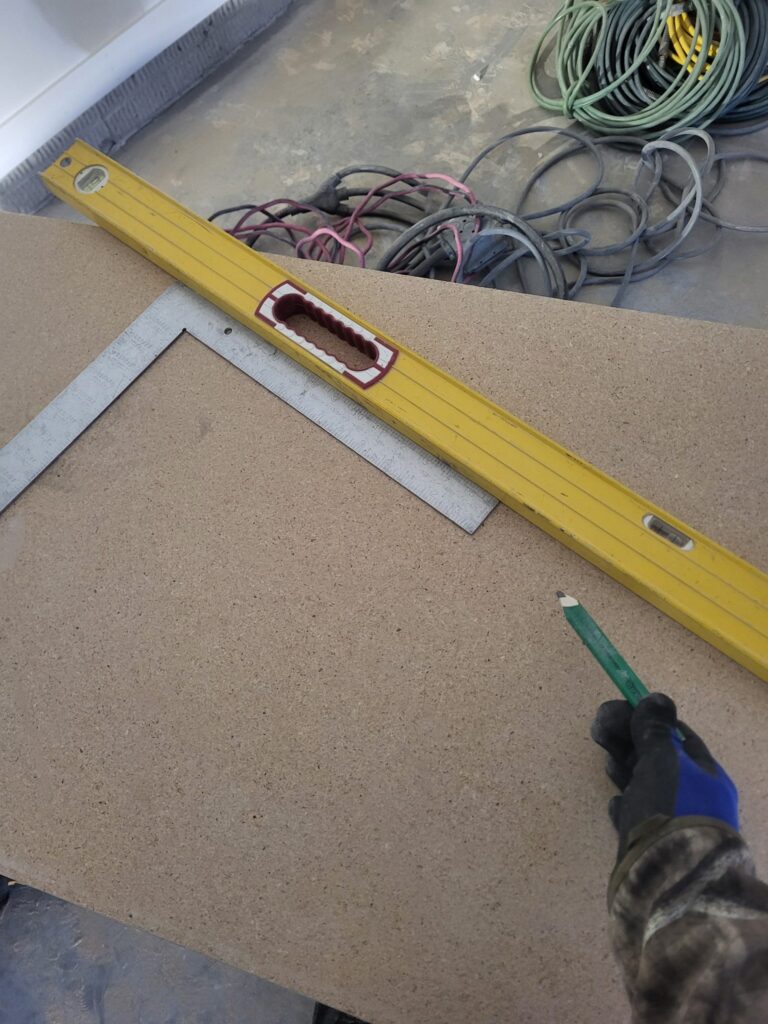
- Six-foot level: check door jambs for plumb.
- Four-foot level: handrails, newel posts and layout measured from stair nosings.
- Torpedo level: closet cleats and caps. No fixed torpedo length is claimed.
Casing follows the jamb reveal; routine baseboard installation does not need a level. Use lasers only as the particular job and guide require.
Blades & Abrasives
The purchase record includes 12-inch 80-tooth fine-finish blades and 5-inch sanding discs. Match the blade's diameter, arbor and speed rating to the saw, and its tooth pattern to the material. The record does not justify guessing a blade brand.
Sandpaper and suitable wood-joint filler belong in the practical kit. Glue, fill and sand wood-to-wood joints so the pieces meet flush and clean. Nail-hole filling, caulking and painting remain painter scope.
Bondo is not our routine miter filler; it may have a role in major painted repairs. Follow the product and job requirements for the filler actually used.
See the baseboard cuts and joints and the crew equipment reference.
There are no merchant or affiliate links on this page. Read the site's affiliate disclosure.