On this page
Introduction #
A window jamb extension is the bridge between the window frame and the finished wall. Every trim step that follows depends on getting it flush.
You need to install a window jamb extension any time a window does not come with its own built-in extensions. Many windows - especially builder-grade vinyl and aluminum units set in exterior walls - leave the rough framing exposed between the window frame and the finished drywall. The window frame itself is usually only 3-1/4″ to 3-1/2″ deep. But an exterior wall framed with 2×6 studs and finished with 1/2″ drywall is roughly 6″ thick. That leaves a gap of 2″ to 3″ of exposed rough framing. It has to be covered before the window can be cased.
A window jamb extension is a four-sided frame - basically a box with no face. It's built from 3/4″-thick material and sized to fit snugly inside the window opening. It bridges the gap between the window frame and the drywall, giving casing a smooth, flat surface to sit against. Door jamb extensions work differently: individual strips glue straight onto the existing door jamb edge. A window extension is different. You build the whole frame first, then slide it into the opening, shim it into place (shims are thin tapered wedges you tap into the gaps to hold something plumb - perfectly vertical, straight up and down - level, or tight against a surface), and nail it to the rough framing.
Some higher-end windows come with factory extension kits or integral jambs that already extend to match the wall thickness. Most budget-to-midrange windows in new construction don't, so the finish carpenter builds the extension instead. The process is straightforward: careful measurement, a clean rip on the table saw (a rip is a lengthwise cut along the grain that brings a board down to a set width), and patience with the shims to get everything flush and straight.
Get this right and the casing goes on clean. Get it wrong and every piece of casing that touches this window will fight you. Build the window jamb extension right the first time - fixing one after the casing is already on is much harder than doing it right up front.
Which guide do I need?
- Most windows, the complete guide: this guide
- Windows 90 to 119 inches tall: Window Jamb Extension for Medium-Tall Windows (90″ to 119″)
- Windows 120 inches and up, two-person job: Window Jamb Extension for Tall Windows (120″ and Above)
Window Jamb Extension Installation Process #
Follow these five steps to complete your window jamb extension. Each step builds on the previous one, so work through them in order.
Step 1: Measure the Gap and the Opening #
Start with accurate measurements. You need two sets of numbers: the gap width (how wide to rip the extension material) and the opening dimensions (how long to cut each piece).
Gap width: Measure the distance from the edge of the window frame to the finished drywall surface. Take this measurement at a minimum of three points on each of the four sides - near each end and in the middle. That's 12 measurements total. Write every single one down. Windows are frequently installed slightly off-center, tilted, or racked (out of square) in the rough opening. Drywall thickness can vary too. The gap on the left side may be 2-1/4″ while the right side is 2-3/8″. The top may differ from the bottom. These differences are normal - your job is to measure them and account for them.
Opening dimensions: Measure the inside width of the opening at the top and bottom. Measure the inside height on the left and right sides. These measurements determine the cut length of your extension pieces.
Use the widest gap measurement from each side group. You can always plane down material that's slightly too wide, but you can't add material to a piece that's too narrow.
Step 2: Rip and Cut Extension Material #
Set your table saw fence to the widest gap measurement from Step 1. If the gap is consistent across all four sides (within 1/16″), rip all your material to a single width. If the gap varies a lot between the sides and the top and bottom, rip different widths for each.
Rip 1/32″ to 1/16″ wider than your widest measurement. This gives you room to plane flush without ending up short. Run the material through the table saw with the factory edge against the fence - the factory edge will face the window side. The freshly ripped edge faces the room and gets covered by casing.
Cut each piece to length. The standard approach is to run the two side pieces the full height of the opening, with the top and bottom pieces fitting between them. This means the side pieces equal the full opening height, and the top/bottom pieces equal the opening width minus twice the material thickness (typically minus 1-1/2″ for two 3/4″ sides).
Pro Tip: If you're doing multiple windows with the same wall thickness, rip all your extension material at once. Set the fence, verify the cut width on a test piece, then rip enough stock for every window on the job. This saves time and keeps the width consistent across the whole project.
Step 3: Assemble the Box #
Dry-fit all four pieces (put them together without glue, just to check the fit) on a flat surface before you commit to glue. The assembled box should be about 1/4″ smaller than the opening in each direction (1/8″ clearance per side), so there's room for shims.
Once the dry-fit looks right, put wood glue on the end grain of the top and bottom pieces (the end grain is the cut face at the end of a board, where the wood fibers show) where they meet the inside face of the side pieces. Position the pieces, then drive two staples or brads into each corner - one near the inside edge, one near the outside edge. The fasteners go through the side pieces into the end grain of the top and bottom pieces.
Immediately after stapling, check the box for square (meaning all four corners are true right angles). Measure the diagonals of the assembled box - corner to corner in both directions. If the two measurements match within 1/16″, the box is square. If they don't, gently push on the longer diagonal until the two measurements match. Let the glue grab for at least 5 minutes before handling. The staples hold the corners in position, but the glue does the real structural work.
Pro Tip: Always assemble the box on the flattest surface you can find - a clean subfloor section, a sheet of plywood on sawhorses, or even the back side of a door blank. If you assemble on an uneven surface, the box can dry with a twist that you'll fight during installation.
Step 4: Install the Box #
Slide the assembled box into the window opening from the room side. Center it roughly in the opening, leaving space on all four sides for shims. The box should slide in without forcing it. If it's too tight, check for dried spray foam, protruding nails, or drywall compound inside the opening, and trim back whatever's in the way.
Starting with the top piece, insert shims between the back of the extension and the rough framing. Use opposing shim pairs (two shims overlapping from opposite directions) to create a flat, adjustable pad. Place shim pairs near each end and in the center - three shim points minimum per side. Push the shims in until the extension is flush with the drywall surface. Check with a straight edge or level laid across the wall and extension.
Repeat the shimming on both sides and the bottom. Work all the way around the box, checking that it's flush with the drywall, level on the horizontal pieces, and plumb on the vertical pieces. On the window side, check that the extension sits tight against the window frame edge.
Once everything is set, nail through the extension and shims into the rough framing with 15-gauge finish nails, 2-3/4″ long. Drive two nails at each shim point - one near the window-side edge, one near the room-side edge. Start at the top, then the sides, then the bottom. After each pair of nails, check that the extension hasn't shifted. Nailing can push things out of alignment, so verify as you go.
Score and snap off any shims that stick out past the drywall surface or window frame edge. Don't saw them off - score with a sharp utility knife, then snap for a clean, flush break.
Step 5: Plane and Sand the Extension Flush #
Even with careful shimming, there will almost always be small mismatches between the extension and the drywall surface. Use a sharp block plane set for a very light cut to bring any proud spots (spots sitting a little higher than the surrounding drywall) flush. Plane along the transition between the extension and the drywall, working with the grain, and check with a straight edge every few passes.
On the window side, check that the extension is flush with, or very slightly proud of, the window frame. If the extension is recessed (sitting lower than the window frame edge), casing won't sit flat across the transition.
Sand all planed areas with 120-grit sandpaper to knock down the plane marks at the drywall transition. Set any proud nail heads below the surface with a nail set, then run a hand across the face to catch anything your eye missed. Wipe away the dust before you move on to casing.
Filling the fastener holes and priming the extension are the painter's steps, not ours. On paint-grade MDF, flag any window prone to moisture - a bathroom or a kitchen with condensation risk - so the painter knows to prime it before it swells. What the painter needs from us is a flush, sanded transition with the fasteners set below the surface.
Window Jamb Extension Quality Check #
After you finish installing the window jamb extension, check these items before you move on to casing:
Go through every item on this list before you case the window. Every item has to pass.
- Extension flush with drywall on all four sides - Run a straight edge from the wall surface across the extension. No step, gap, or bump. If the straight edge rocks, plane the high side.
- Extension tight to window frame - Check that the box sits against the window frame edge consistently. No gaps wider than 1/16″.
- Box corners are tight - Inspect each assembled corner joint. No gaps or separation. If you see a gap, disassemble the corner and redo it - a joint filled to look closed will open again once the box is handled and installed.
- Extension is level and plumb - Check top and bottom pieces with a level. Check each side piece for plumb. A twisted or out-of-level extension will make casing installation difficult.
- Casing sits flat when held in position - Hold a piece of casing material against the extension and the wall. The casing should contact both surfaces fully without rocking. Test at multiple points on all four sides.
- Window still operates properly - Open, close, and lock the window. The extension and nails must not interfere with the sash (the moving part of the window that holds the glass) or the hardware.
- Shims are trimmed flush - No visible shim material protruding past the extension face on either side.
- Surface is smooth to the touch - All planed and sanded areas should have no rough spots or visible tool marks, and every nail head should sit below the surface.
Troubleshooting Window Jamb Extension Problems #
Box Won't Fit in the Opening #
Check for dried spray foam, drywall compound, or protruding framing nails inside the rough opening. Trim foam with a utility knife, scrape compound with a flexible scraper, and pull or pound flat any nails. If the box is actually too large, double-check your measurements - the box dimensions should be about 1/4″ smaller than the opening in each direction. Rebuild if you need to.
Extension Not Flush with Drywall #
If the extension is proud (sticking out past the wall), the extension was ripped too wide or the shims are pushed in too far. Plane the room-side edge flush. If it's more than 1/16″ proud across the entire length, back the shims out and re-nail. If the extension is recessed (wall sticks out past extension), push the shims deeper. If the extension is too narrow, remove it, rip wider material, reassemble, and reinstall.
Box Racks or Twists After Installation #
If the box goes in square but ends up racked after shimming, the shims were applied unevenly. Remove the nails, start the shimming process over, and check diagonal measurements of the installed box before nailing. A framing square held in each corner should show clean 90-degree angles.
Gap Between Extension and Window Frame #
If you see a gap between the extension and the window frame on one or more sides, the box is a little small, or the shims aren't pushed in far enough on that side. Gaps under 1/8″ are small enough for the painter to seal - leave them alone. For bigger gaps, shift the whole box toward the gap side by adjusting the shims on the opposite side.
Extension Bows Between Shim Points #
If the extension is straight at the shim locations but bows between them, add more shim points. Space shims every 10″ to 12″ instead of the minimum three points. If the material itself is warped, rip a replacement piece from flatter stock - warped material causes problems at every step after this one.
Once the box is in, plumb, and flush, the hardest part of the job is done. A properly built window jamb extension disappears under the casing. If you never think about it again after the trim goes on, you did it right. Keep the same care with shimming and flush-checking on every window jamb extension you build, even after it becomes routine.
Related Window Jamb Extension Guides #
For additional context on jamb extensions in general, see this guide from our door jamb extension article.
- How to Install a Door Jamb Extension - The same concept applied to door openings. Individual strips instead of a pre-built box, but the measurement and alignment skills transfer directly.
- How to Case a Window - Window casing is the trim that goes over the extension. Install the extension first, then case the window.
- How to Install Baseboard - Baseboard meets the window casing at floor level. Getting the extension and casing right first makes the baseboard intersection clean.
Related Guides #
- Window Jamb Extension for Medium-Tall Windows (90″ to 119″)
- Window Jamb Extension for Tall Windows (120″ and Above)
- How to Install an Interior Window Frame
Reference Photos #
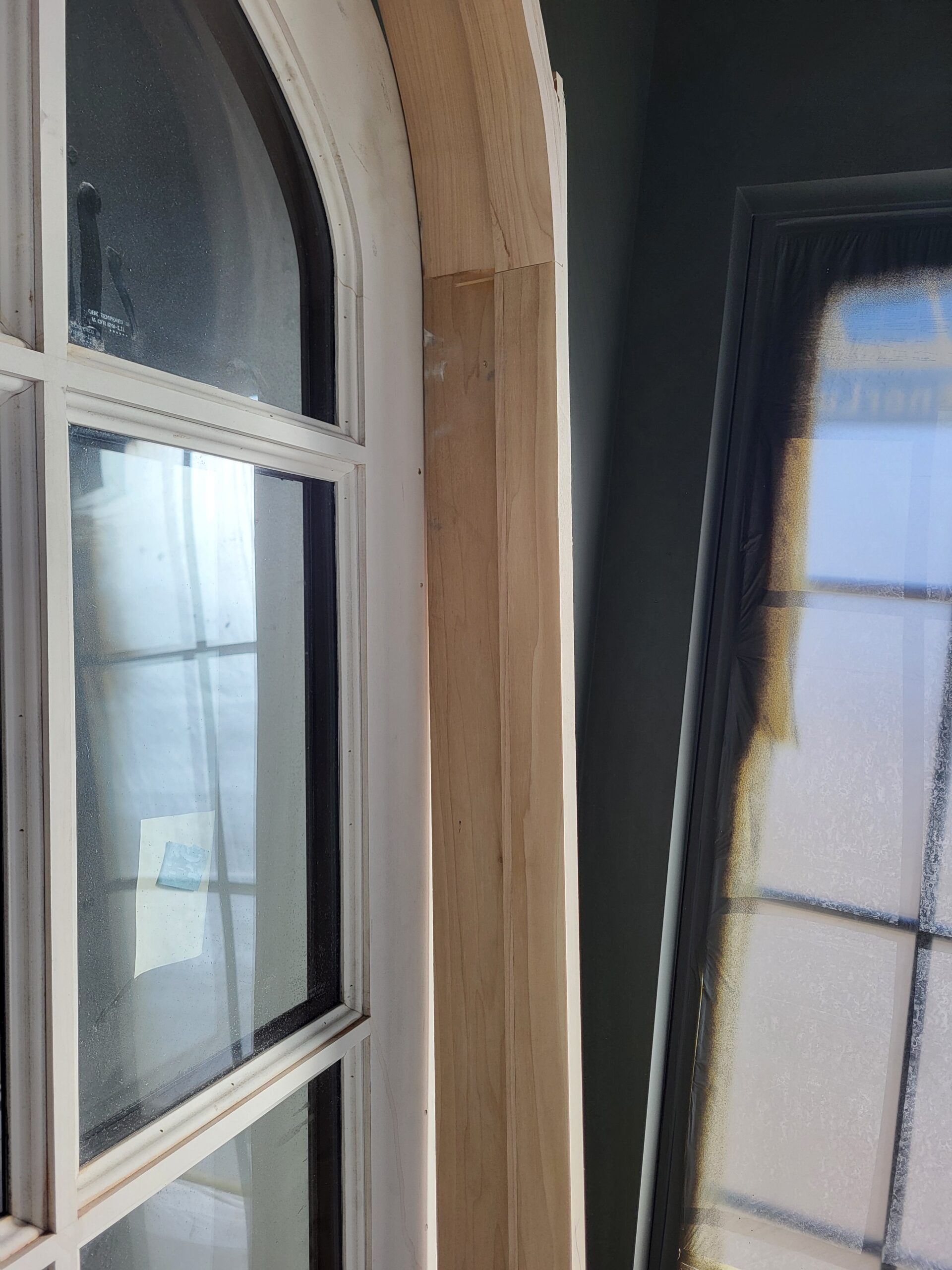
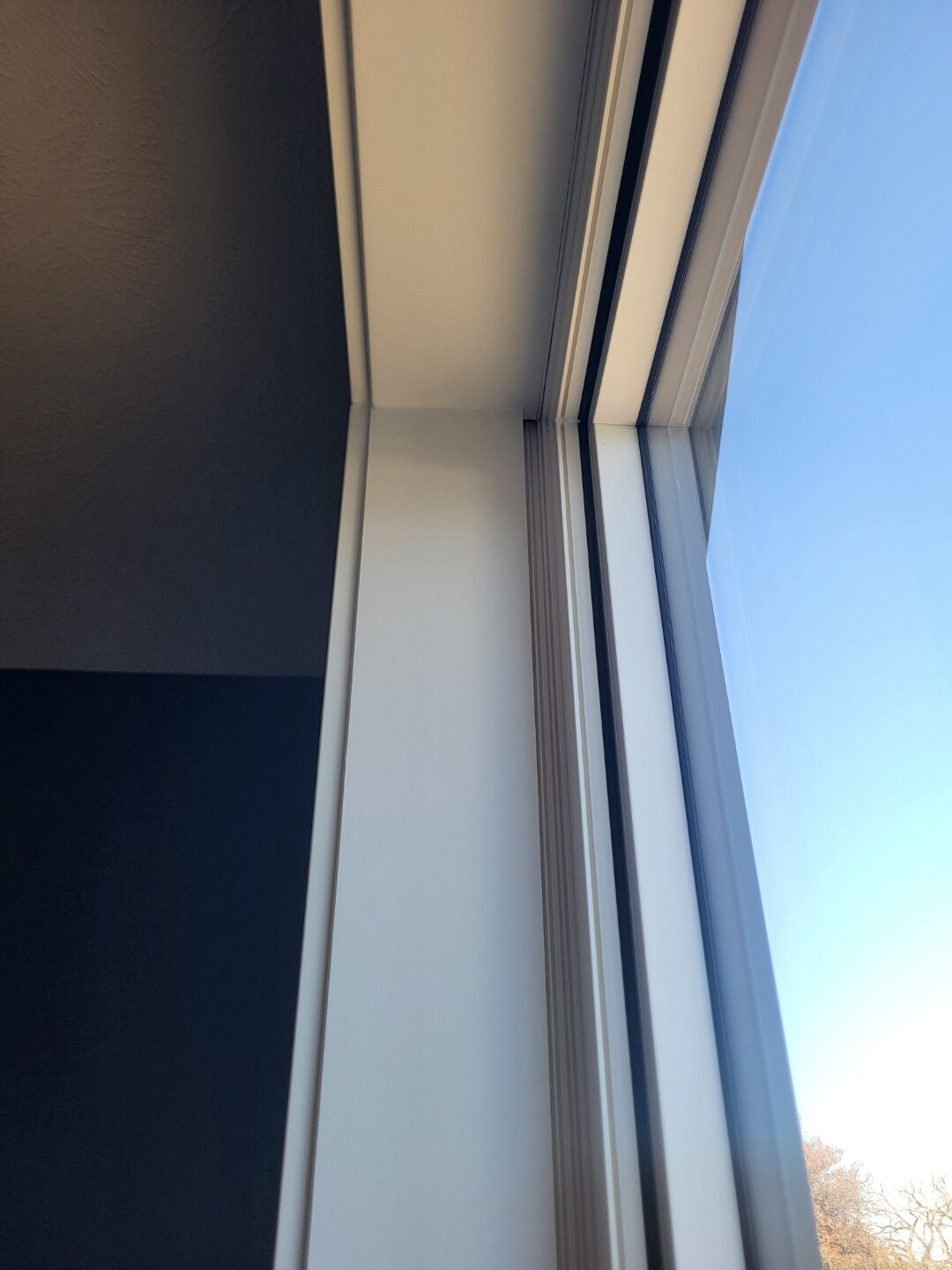
The following photos show examples of this type of work completed in the field. These serve as visual references for quality standards, proper installation techniques, and finished results.
Showing 2 of 2 photos