On this page
Introduction #
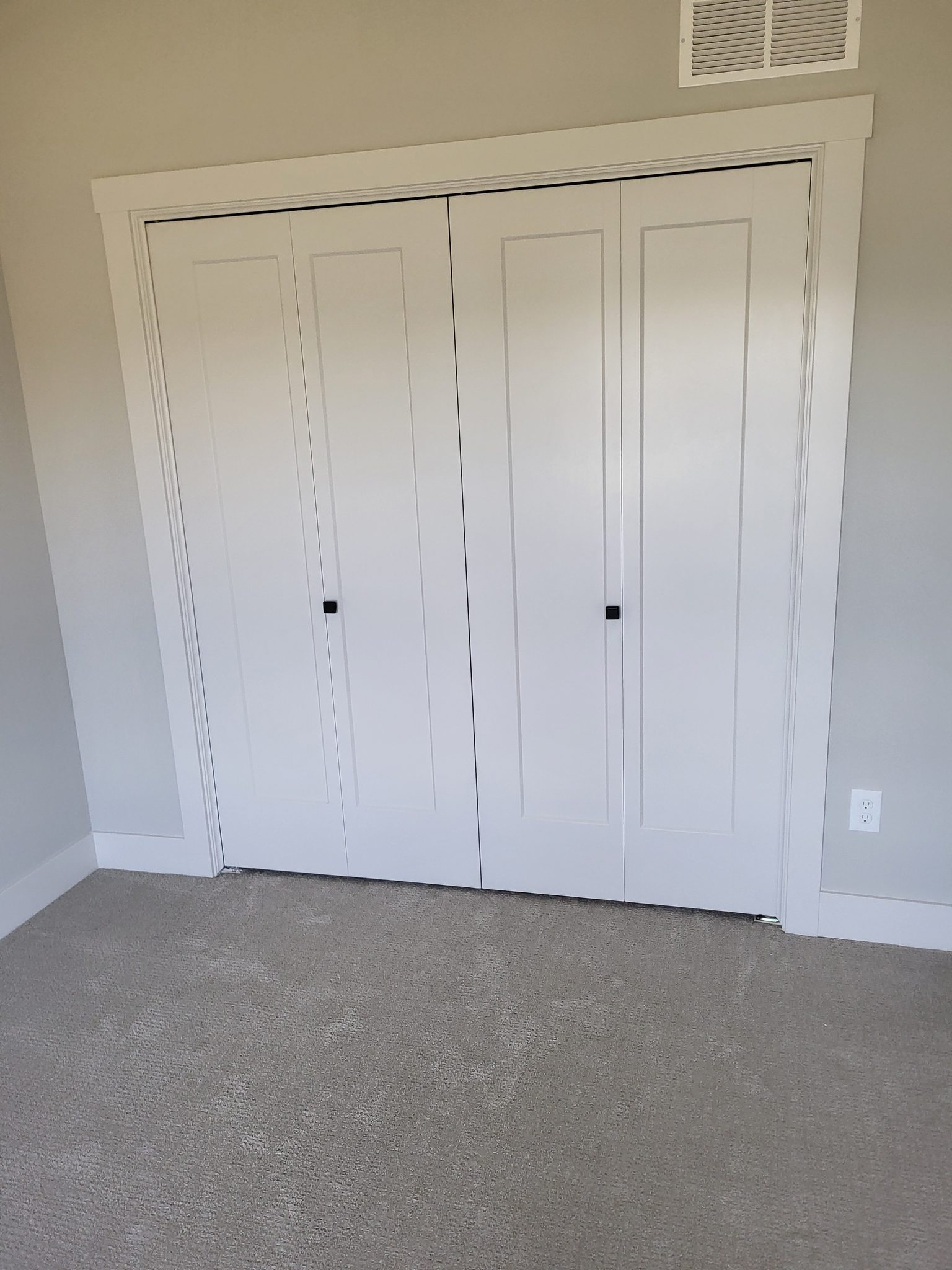
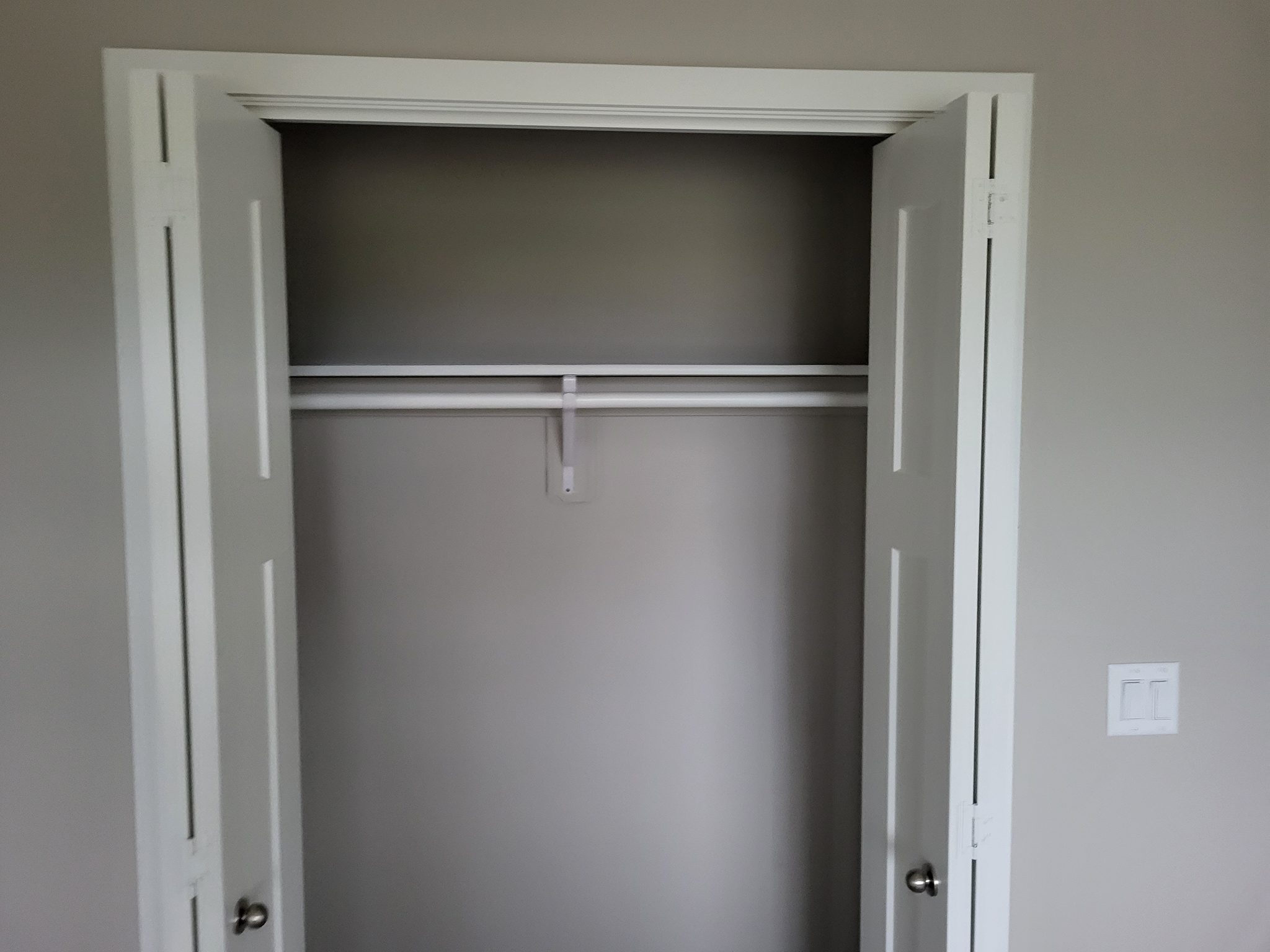
Bifold doors are the most common closet door in residential construction. They use two panels, or four panels for wider openings, hinged together so they fold like an accordion when you open them. When closed, they look like a normal pair of doors. When open, each pair of panels folds flat against the side of the opening. That gives you the full width of the closet. The door does not swing out into the room, and you do not need extra wall space the way you would for a pocket door (a door that slides into a hidden slot built into the wall).
One side of the door is the pivot side. It turns on two pins, one at the top and one at the bottom, set into the jamb (the wood frame that lines the door opening). The other side, the non-pivot side, rides along a track (a metal channel mounted under the head jamb) using a small wheel or slider called a roller guide. You adjust the door using spring-loaded pivot pins and guides mounted in the track. The hardware itself is simple and cheap. Once you understand the basic idea, a fixed pivot on one side and a sliding guide on the other, the install goes the same way in every closet in the house.
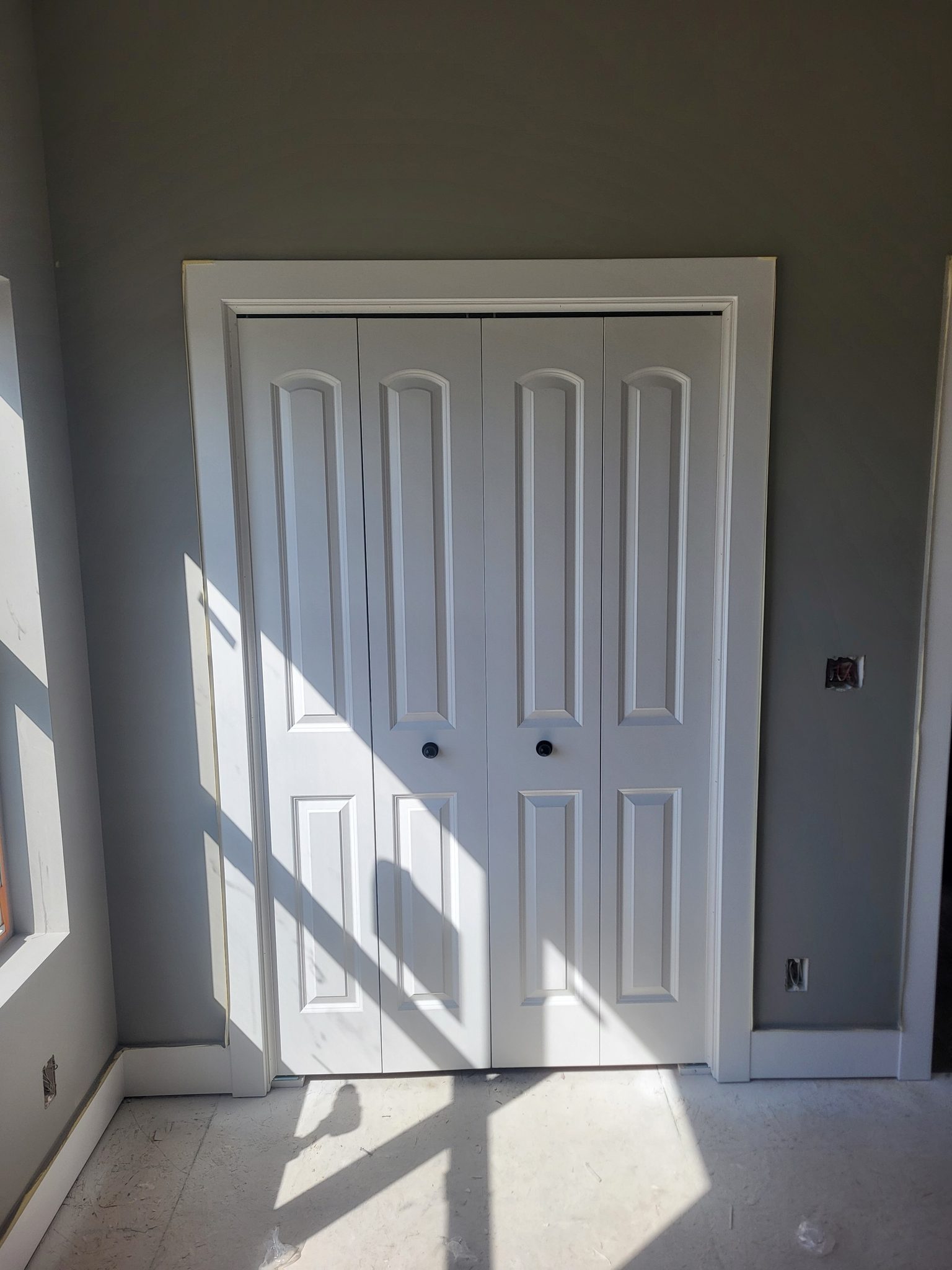
Bifold doors come in two setups. A single bifold has two panels and one track. A double bifold has four panels and two tracks that meet in the center. The install steps are the same for both. A single bifold covers openings up to about 3 feet wide. Double bifolds handle openings from 4 to 6 feet. On a double bifold, you just repeat the same steps for the second pair of panels.
Which guide do I need?
- Bypass sliding doors, full install: How to Install Bypass Doors
- Bypass finish install from a finished opening: How to Finish a Bypass Door Install
- Bifold folding doors, full install: this guide
- 6 foot 8 inch opening, track, guides and hanging: How to Install a 6'8" Bi-Fold or Bypass Door Frame
- 8 foot opening, rough frame only: How to Install an 8'0" Bi-Fold or Bypass Door Frame
- 6 foot 8 inch door slabs, hanging and fixes: How to Install 6'8" Bi-Fold or Bypass Door Slabs
- 8 foot door slabs, bifold or bypass: How to Install 8'0" Bi-Fold or Bypass Door Slabs
Before You Begin #
Prerequisites #
Before you install bifold doors, make sure these things are ready.
- The rough opening is framed and the jamb (the wood frame around the opening) is installed, with the head jamb on top and a side jamb on each side. The jambs are plumb, level, and square.
- The floor covering is finished (carpet, tile, hardwood, or LVP). You need the finished floor height set before you can figure out the clearance for the bottom pivot pin.
- You have measured the opening width and height, and they match the size of the bifold door you are installing.
What You Need To Know #
Learn the hardware system before you start. It will save you time and save you a callback (a trip back to the job after the customer calls to say something is wrong).
- The track mounts to the underside of the head jamb. It carries the roller guide, which supports the non-pivot side of the door as it opens and closes.
- The bottom pivot bracket mounts to the floor or to the door jamb on the pivot side. It holds the bottom pivot pin and anchors the door at the hinge side.
- Doors usually need to be trimmed to fit the opening height. Standard clearance is a 3/4″ to 1″ gap at the bottom, between the door and the finished floor. Measure carefully before you cut.
- The manufacturer usually pre-drills the holes for pivot pins and roller guides in the door panels. Check that these holes exist before you start. If they are missing, drill them yourself using the template that comes with the hardware kit.
- The spring-loaded top pivot pin is the key to hanging the door. It pushes up into a socket in the track, which lets you tilt the bottom of the door into the floor bracket. Understand this move before you start and the hang will go a lot faster.
Tools Required #
Power Tools #
- Drill/driver
- Circular saw (for trimming door height if needed)
Hand Tools #
- Tape measure
- Pencil
- Screwdriver (flathead and Phillips)
- Level
- Hacksaw (for cutting track to length if needed)
Supplies #
- Bifold door hardware kit - includes track, pivot brackets, roller guides, pivot pins, and aligners (usually packaged with the doors)
- Screws (provided in hardware kit or matching size)
Materials #
- Bifold door panels (two panels for single bifold, four panels for double bifold)
- Door knobs or pulls
How to Install Bifold Doors #
Step 1: Measure and Prep #
The first step is to measure carefully. Measure the opening width at the top (at the head jamb) and at the bottom (at the floor). Measure the height on both sides. If the opening is not square, you will need to trim the doors to the smallest dimension, minus the clearance you need. Check the opening for plumb and level. Bifold doors are less forgiving of an out-of-square opening than a hinged door, because the track has to be level or the roller guide will not run smoothly.
If you need to trim the doors for height, measure the finished opening height and subtract 3/4″ to 1″ for bottom clearance. This gap lets the door swing open over carpet or flooring without dragging. When you trim, remove equal amounts from each panel. This keeps the panels in proportion and keeps the hinge joint centered. Clamp a straightedge to the door and run your circular saw against it for a clean, straight cut.
Step 2: Install the Track #
The track has to fit the opening exactly. Cut the track to fit the opening width if needed. Most tracks come slightly long and need to be trimmed with a hacksaw. File off any burrs from the cut end so the roller guide slides smoothly. Center the track on the underside of the head jamb, with an equal setback from the front and back edges. Screw the track in with the provided screws, driving them into the head jamb framing for a solid hold.
For a single bifold, put the roller guide slider in the track on the non-pivot side. For a double bifold, put one roller guide slider on each side of center. Check that the sliders move freely in the track before you go on.
Pro Tip: On a double bifold (4 panels), the track has a center stop, sometimes called a snugger. Make sure it is centered in the opening before you tighten it down. This stop keeps the two door pairs from overlapping in the middle and holds them in line when closed.
Step 3: Install Bottom Pivot Bracket #
The bottom pivot bracket anchors the whole door assembly, so get this one right. Mount it on the floor at the pivot side of the opening. The bracket holds the bottom pivot pin and anchors the door at the jamb. Set it so the door will sit centered in the opening when closed, typically 3/8″ from the edge of the door jamb. Some brackets mount to the floor surface, and others mount to the face of the side jamb near the floor. Use whichever style matches your hardware kit.
Screw the bracket down with the provided screws. If you are mounting into tile or hardwood, pre-drill so it doesn't crack. The bracket carries the weight of the pivot side of the door, so it needs a firm anchor. If the screws don't bite into solid material, it will loosen fast. On carpet, push the bracket down through the carpet pile to the subfloor underneath.
Step 4: Install Pivot Pins and Roller Guide on Doors #
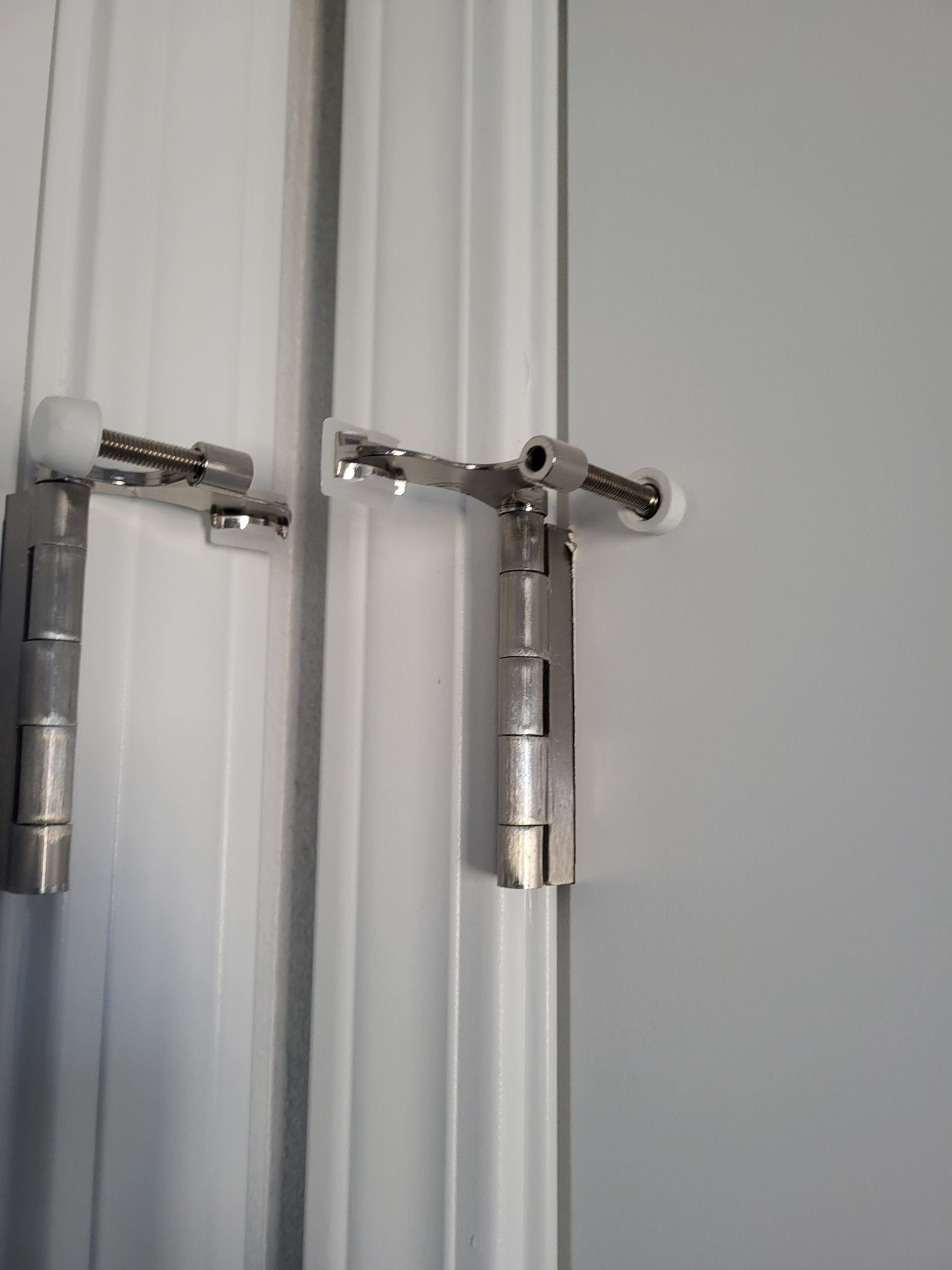
Put the spring-loaded top pivot pin into the pre-drilled hole at the top corner of the jamb-side panel. This pin has a spring inside it. You push it up to compress the spring and clear the track socket while you install the door, then let go so it locks into place. Put the bottom pivot pin into the pre-drilled hole at the bottom corner of the same panel. This pin is usually fixed, or it has a small height adjustment.
Install the roller guide pin at the top corner of the track-side panel (the panel opposite the pivot side). This pin rides in the overhead track and supports the non-pivot side of the door as it opens and closes. If the two panels are not already hinged together, connect them now using the hinges that came with the door, usually two or three hinges along the edge where the panels meet.
Pro Tip: The spring-loaded pivot pin pushes UP into the track hole. Push it up, tilt the bottom of the door into the floor bracket, then let the spring pin drop into the track socket. Practice the motion once before you try it for real. It feels awkward the first time. A helper holding the door steady while you set the pins makes this a lot easier.
Step 5: Hang the Door #
Now you hang the door in the opening. Tilt the door assembly into the opening at a slight angle. Set the bottom pivot pin into the hole in the floor bracket first. Then push the spring-loaded top pivot pin upward, compressing the spring, and line it up with the pivot socket at the end of the track. Let go of the spring pin so it seats into the socket. The door should now be held at the top and bottom on the pivot side.
Slide the roller guide pin on the opposite panel into the track slider. The roller guide should move freely along the track as you open and close the door. Fold and unfold the door a few times to test it. It should move smoothly, with no binding, jumping, or dragging. If the door feels stiff or catches, check that the roller guide is seated properly in the track and that both pivot pins are fully engaged.
Step 6: Adjust and Install Hardware #
The door is hanging now, but it still needs fine-tuning to swing smoothly. Use the adjustment screw on the bottom pivot bracket to raise or lower the pivot side of the door. This controls how plumb the door hangs and the size of the gap at the bottom. Turn the screw clockwise to raise the door and counterclockwise to lower it. Check the door with a level and adjust it until it hangs plumb when closed. The gap at the bottom should stay even across the full width of the door.
Adjust the roller guide position in the track to set the spacing between the door and the side jamb on the non-pivot side. The guide usually has a small set screw that lets you slide it along the track and lock it in place. Set it so the door sits centered in the opening when closed, with equal gaps on both sides.
Install door pulls or knobs on the leading panel (the panel closest to the center of the opening). Set the hardware at a comfortable height, typically 36″ from the floor, centered on the panel width. If your hardware kit came with door aligners, install them at the top of the opening. These are small clips or magnets that keep the panels lined up and flush when the door is closed.
Quality Check After You Install Bifold Doors #
- Door folds and unfolds smoothly without binding or catching
- Door hangs plumb when closed
- Even gap at top and bottom
- Panels align flush when closed
- Knobs or pulls installed and functional
- Door does not jump off track during operation
- Bottom clearance is consistent across the full width of the door
Troubleshooting #
Door Jumps Off Track #
This is the most common callback on bifold doors. If the door pops out of the track while it's opening or closing, the roller guide is probably worn, or the track is out of alignment. Check the roller guide pin. If it is bent or the roller is cracked, swap in a new one from the hardware kit. Check that the track is fastened tight and level. If it has shifted, re-secure it to the head jamb. Also check that the roller guide slider is the right size for the track. Mismatched hardware from different manufacturers can cause fit problems.
Door Doesn’t Close Flush #
If the door doesn’t sit flush in the opening when closed, adjust the bottom pivot bracket. You can move the bracket in or out, toward or away from the jamb, to change where the door sits when closed. Loosen the bracket screws a little, move it, and re-tighten. Small moves make a big difference here. Move it 1/16″ at a time and test after each move, until the door sits flat and centered in the opening.
Door Drags on Carpet or Floor #
Raise the bottom pivot pin using the height adjustment screw on the pivot bracket. This lifts the whole door and increases the bottom clearance. If you run out of adjustment range and the door still drags, you may need to trim the bottom of the door panels. Take the door down, mark the cut line evenly across both panels, and trim it with a circular saw against a straightedge guide. Reinstall the door and check the clearance again.
Panels Don’t Align When Closed #
Fix misaligned panels by installing or adjusting the top aligner (also called a snugger). This small piece of hardware mounts at the top of the opening and pushes gently on the panels to hold them in line when the door is closed. If an aligner is already there, adjust its position. Moving it closer to or farther from the center of the opening changes how the panels meet. Also check that the hinge between the panels is not loose. Worn hinge screws can cause misalignment too.
Door Binds When Folding #
If the door resists folding or feels stiff at the hinge, check the hinge screws. They may be overtightened, which stops the panels from pivoting freely. Back the screws out a quarter turn and test. If the panels are warped, which is common with hollow-core doors that were stored the wrong way, the warp creates friction at the hinge joint. Minor warping can sometimes be fixed by adjusting the pivot bracket and track position. Severely warped panels need to be replaced. No amount of hardware adjustment will fix a twisted door.
Related Guides #
For additional detail on bifold door hardware mechanisms, see this guide from our bi-fold and bypass door slab article.
- How to Install Bypass Doors
- How to Install a Pre-Hung Door
- How to Build Basic Closet Shelves
- How to Install a 6'8" Bi-Fold or Bypass Door Frame
- How to Install an 8'0" Bi-Fold or Bypass Door Frame
Reference Photos #
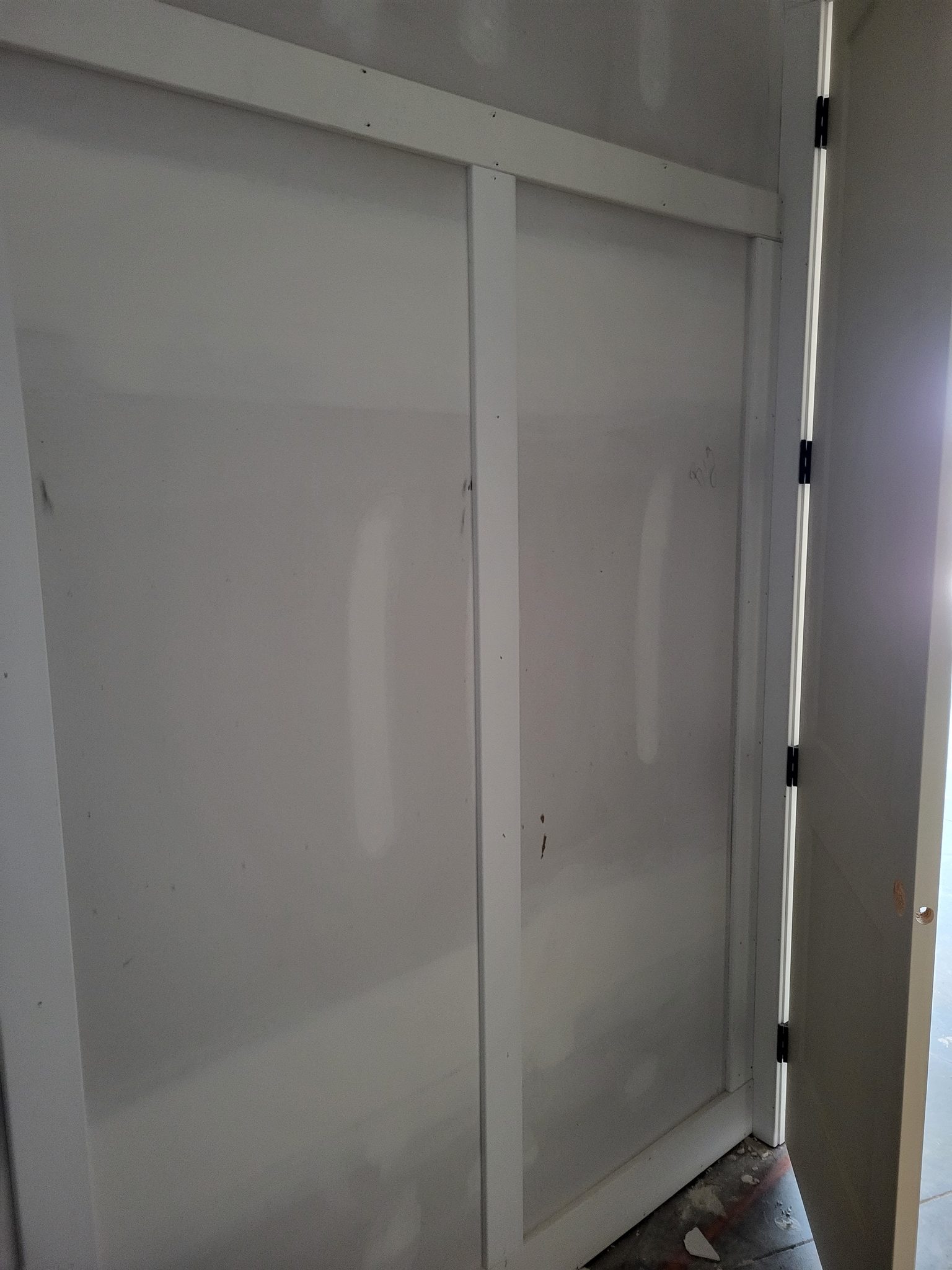
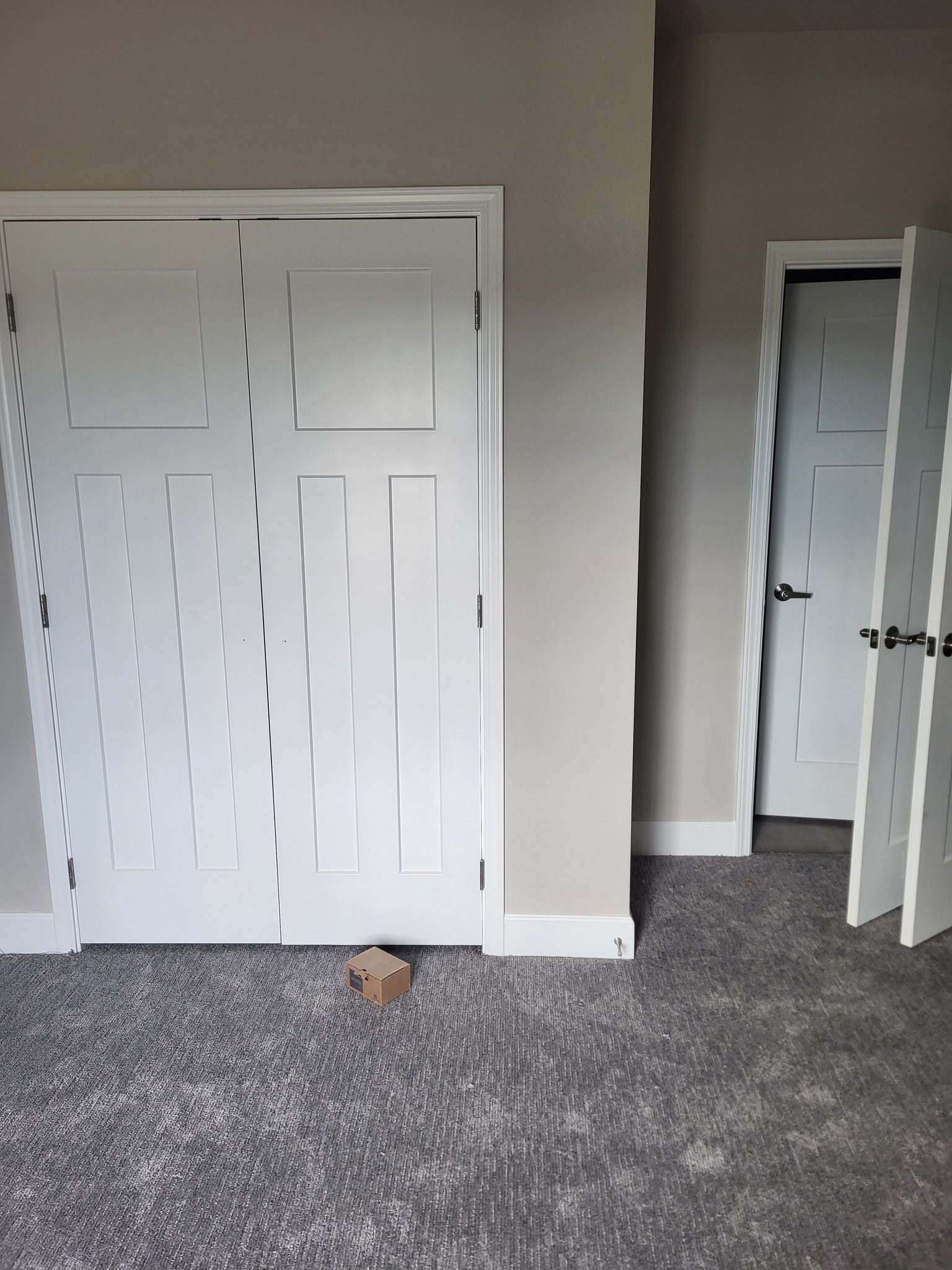
The following photos show examples of this type of work completed in the field. These serve as visual references for quality standards, proper installation techniques, and finished results.
Showing 7 of 7 photos