General Carpentry #
Skill Level: Intermediate (Level 2) #
Estimated Time: 2-6 Hours per Wall (varies by orientation) #
Introduction #
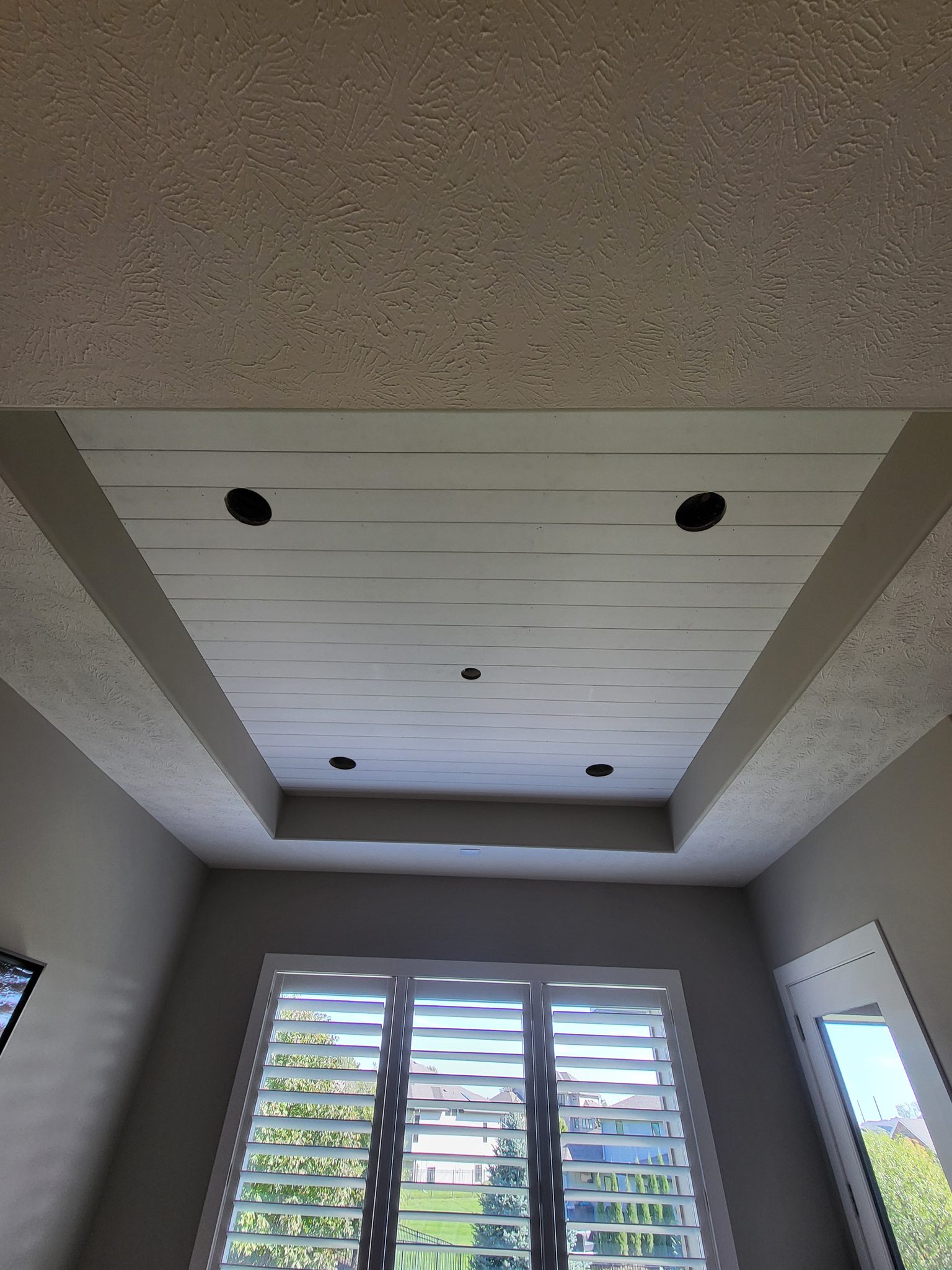
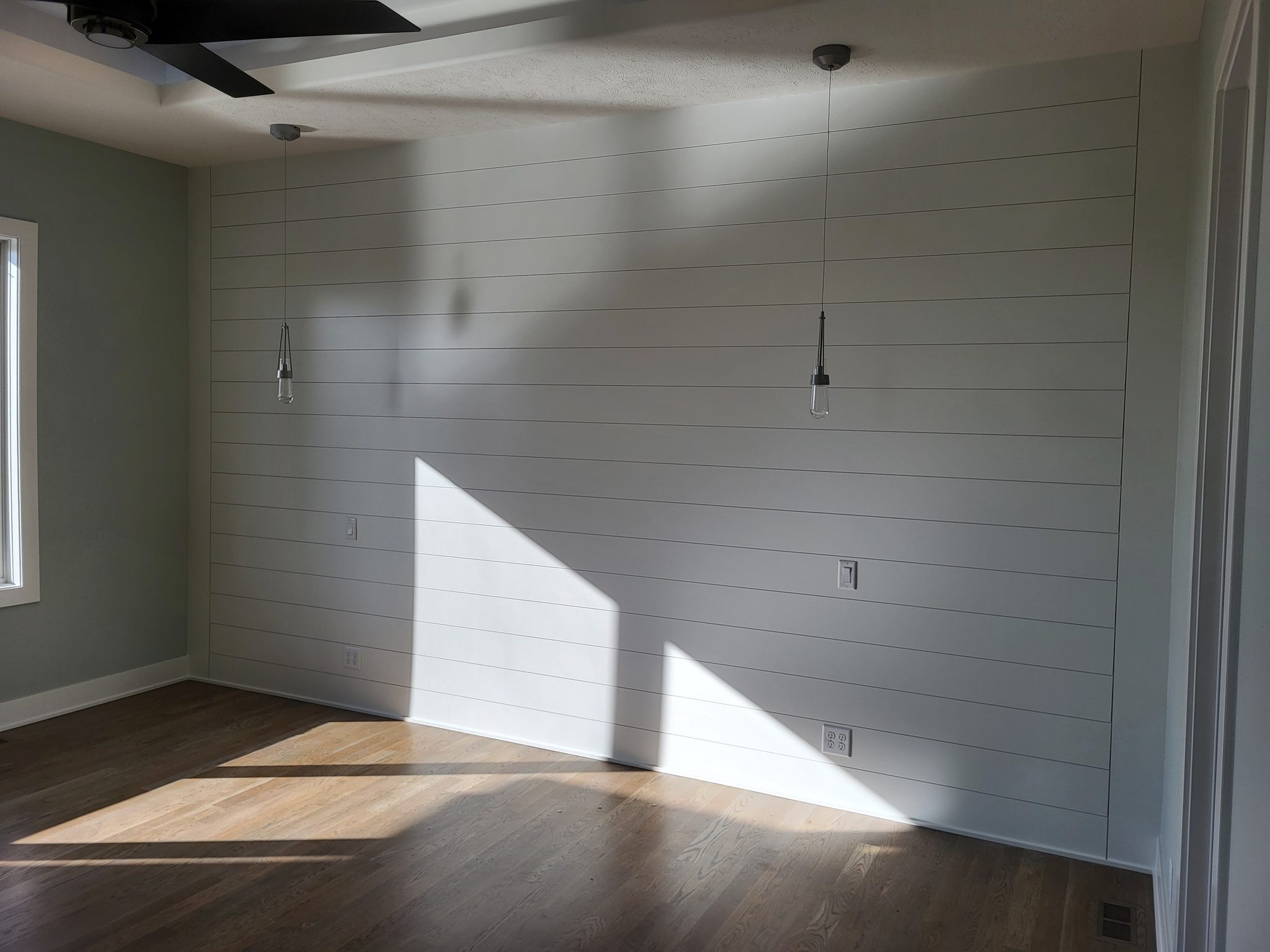
Additionally, learning how to install shiplap is one of the most rewarding wall treatment projects in modern home design. Originally used as exterior siding on ships and barns, shiplap boards with their overlapping rabbet joints now create stunning interior accent walls, feature walls, and full-room treatments in every style from modern farmhouse to contemporary minimalist.
Furthermore, while most people think of shiplap as horizontal boards, you can use multiple orientations — each creating a dramatically different visual effect. Horizontal is the classic look that widens a room. Vertical draws the eye upward and adds height. Herringbone creates a sophisticated zigzag pattern with boards meeting at right angles. Chevron creates a bold V-pattern where boards meet at sharp angles pointing up or down. Each orientation has different difficulty levels, material requirements, and installation techniques.
Moreover, you can install shiplap over existing drywall or directly to studs on new construction. The boards interlock via their rabbeted edges, creating a consistent shadow line between each course. Regardless of orientation, the fundamentals remain the same: acclimate the material, plan your layout carefully, find your studs (or install a plywood substrate for angled patterns), and maintain consistent spacing throughout.
However, this guide covers all four ways to install shiplap. Master horizontal first — it’s the foundation. Once you understand the basics of leveling, spacing, and nailing, the other orientations build on those same skills with added complexity.

📷 Photo Needed
Completed install shiplap — finished result showing professional quality
Choosing Your Orientation #
Consequently, before starting, decide which orientation best fits your space. Each creates a different visual effect, requires different skill levels, and uses different amounts of material.
Horizontal (Classic) #
- Visual effect: Widens the room, creates a calm, traditional look
- Difficulty: Easiest — great for beginners
- Waste factor: Low (5-10%) — boards run wall-to-wall with minimal cutting
- Substrate: Can nail directly into studs through drywall — no plywood backer needed
- Best for: Full rooms, long walls, bedrooms, living rooms, hallways
- Time estimate: 2-4 hours per wall
Vertical #
- Visual effect: Adds height, creates a board-and-batten or wainscoting feel
- Difficulty: Easy to moderate — slightly more complex than horizontal due to nailing challenges
- Waste factor: Low to moderate (10-15%) — boards may need trimming for height
- Substrate: Requires horizontal blocking or furring strips between studs (boards run parallel to studs and can’t nail into them consistently)
- Best for: Accent walls, wainscoting, rooms with low ceilings, bathrooms, entryways
- Time estimate: 3-5 hours per wall (includes adding blocking/furring)
Herringbone #
- Visual effect: Sophisticated zigzag pattern — boards laid at 45° meeting at 90° angles, creating a woven or braided appearance
- Difficulty: Advanced — requires precise 45° cuts and careful layout planning
- Waste factor: High (25-35%) — many angled cuts, especially at wall edges where boards are trimmed to fit
- Substrate: Strongly recommend 1/2″ plywood backer over drywall — angled boards won’t consistently hit studs
- Best for: Feature walls, fireplace surrounds, behind headboards, dining room accent walls
- Time estimate: 4-6 hours per wall
Chevron #
- Visual effect: Bold V-pattern or arrow shape — boards meet at a center line at matching angles, creating a strong directional pattern
- Difficulty: Most advanced — requires compound angle cuts and perfect symmetry at the center seam
- Waste factor: Very high (30-40%) — every board is angle-cut on both ends, and matching pairs must be cut precisely
- Substrate: Must have plywood backer — angled boards have no reliable stud connection
- Best for: Dramatic feature walls, entryway statements, behind media walls, above fireplaces
- Time estimate: 5-8 hours per wall
Material ordering tip: For horizontal and vertical, order 10-15% more material than the wall’s square footage. For herringbone, order 30% more. For chevron, order 35-40% more. The angled cuts create significantly more waste, and running short mid-project means mismatched material from different lots.
📷 Photo Needed
Choosing Your Orientation — photo illustrating this section
Before You Begin #
Additionally, before starting, confirm these prerequisites are complete and review the key techniques.
Prerequisites #
- Wall surface ready (drywall or exposed studs)
- Stud locations marked (for horizontal installation) or furring strips/blocking planned (for vertical)
- Plywood backer installed (required for herringbone and chevron patterns)
- Material acclimated to room humidity for 48 hours — stack boards flat with spacers between layers for air circulation
- Boards pre-finished if desired (painting or staining individual boards before install is faster and more thorough than finishing an assembled wall — you can’t easily get paint between the reveals after installation)
- Orientation chosen and layout drawn/planned on paper or the wall itself
What You Need To Know #
- Shiplap board “exposure” (visible width) is the board width minus the lap — typically 5.5″ or 7.25″ exposure for nominal 6″ and 8″ boards
- For horizontal: calculate total layout as wall height ÷ board exposure = number of courses. If the top or bottom row is less than 2″, adjust your starting point or rip boards to equalize
- For vertical: calculate as wall width ÷ board exposure = number of columns. Same equalization rules apply for left and right edges
- For herringbone and chevron: calculate based on the wall area, not linear dimensions — the angled boards use more material per square foot
- Boards MUST be nailed into studs (horizontal), blocking/furring strips (vertical), or plywood backer (herringbone/chevron) — never into drywall alone
- Stagger end joints so seams don’t line up in adjacent rows (horizontal and vertical installations)
- For angled patterns, a miter saw with a positive stop at 45° is essential — even 0.5° off will compound across the wall and become visible
Tools Required #
Power Tools #
- Miter saw (essential for all orientations — must have accurate 45° stops for herringbone/chevron)
- 18-gauge brad nailer
- Table saw (for ripping edge boards to width)
- Stud finder
- Jigsaw or oscillating multi-tool (for outlet/switch cutouts)
- Circular saw (optional — helpful for cutting plywood backer sheets)
Hand Tools #
- Tape measure
- Pencil
- Level (4-foot for horizontal/vertical, 2-foot for angled patterns)
- Chalk line
- Speed square (critical for marking 45° angles on herringbone/chevron boards)
- T-bevel gauge (for checking and transferring odd angles on non-square walls)
- Utility knife
- Caulk gun
- Block plane (for fine-fitting edge boards)
Supplies #
- 18-gauge brad nails (1.5″ for attaching to plywood backer, 2″ for nailing through drywall into studs)
- Spacers (nickels, 1/8″ shims, or purpose-made spacers for consistent reveals)
- Construction adhesive (recommended for herringbone/chevron, optional for horizontal/vertical)
- Painter’s caulk
- Wood filler (color-matched if staining)
- 120-grit sandpaper
- Primer/paint or stain (pre-finish boards before installation)
- Wood glue (for herringbone/chevron center seam joints)
Materials #
- Shiplap boards (tongue-and-groove, rabbeted, or square-edge with spacers)
- 1/2″ plywood sheets (for backer on herringbone/chevron patterns — install over drywall, screw into studs)
- 1×3 or 1×4 furring strips (for vertical installations — horizontal blocking between studs)
📷 Photo Needed
Tools and materials laid out for installing shiplap — everything needed before starting
How to Install Shiplap Horizontally (Classic Method) #
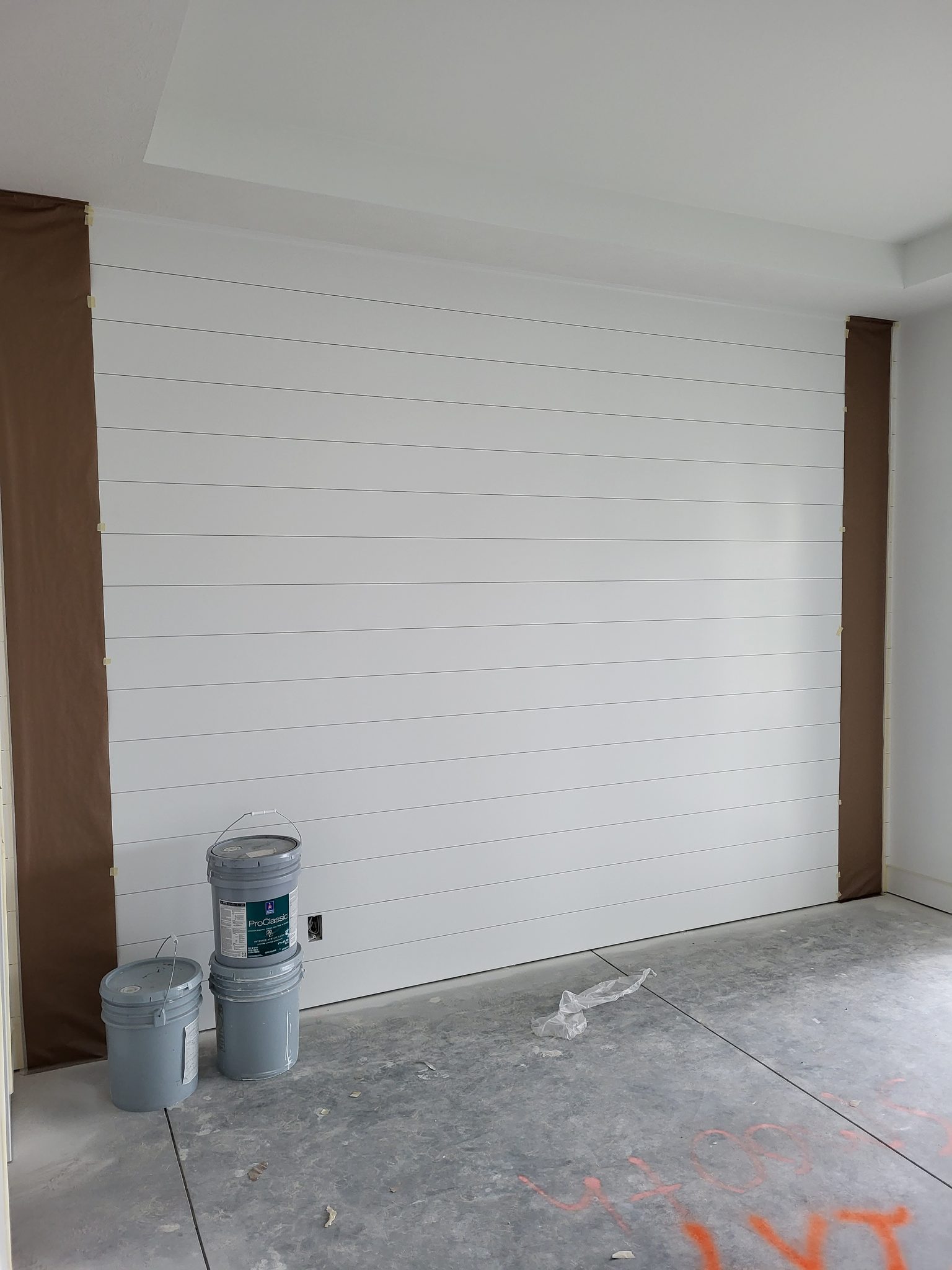
Furthermore, the easiest way to install shiplap is horizontally. Boards run left to right across the wall, lapping over each other as you work from the bottom up. This is where every shiplap installer should start.
Step 1: Prepare the Wall and Plan Layout #
Moreover, find and mark all stud locations (16″ or 24″ on center). Measure the wall height and calculate the number of courses by dividing wall height by your board exposure. Determine if the top or bottom rows need ripping to avoid thin slivers. If the math leaves you with a row less than 2″ at top or bottom, split the difference — rip both the first and last rows so they’re equal and look intentional. Snap a level chalk line for the first course.
Pro Tip: Mark stud locations on the ceiling and floor with painter’s tape arrows pointing down/up. This way you can see where to nail even after the studs are covered by installed boards.
📷 Photo Needed
Prepare the Wall and Plan Layout — showing the key action and what the result should look like
Step 2: Install the First Course #
However, this is the MOST IMPORTANT board when you install shiplap horizontally. It must be perfectly level because every subsequent course follows it. Start at the bottom. Use a level across the full length of the board. Shim behind the board if the wall is uneven. Nail into every stud with 18-gauge brads — two nails per stud (one near the top edge, one near the bottom).
Pro Tip: If the floor isn’t level (and it probably isn’t), DO NOT follow the floor line. Follow your LEVEL line. A level board with a small gap at the floor (hidden by baseboard) looks infinitely better than a crooked board that follows an uneven floor.
📷 Photo Needed
Install the First Course — showing the key action and what the result should look like
Step 3: Build Up Course by Course #
Consequently, place the next board on top with the lap joint engaged. Use a nickel or spacer for consistent reveal between boards. Nail into every stud. Check for level every 4-5 rows — if boards have drifted, make small adjustments spread over 2-3 rows rather than one jarring correction. Stagger end joints by at least 2 stud bays (32″ minimum) so that seams don’t stack up vertically.
📷 Photo Needed
Build Up Course by Course — showing the key action and what the result should look like
Step 4: Handle Outlets and Switches #
Additionally, mark outlet and switch locations on the board by measuring from the board below AND from the nearest wall end. Cut openings with a jigsaw or oscillating tool. Cut slightly oversized — the outlet cover plate will hide the edge. Always turn off power at the breaker before working around electrical.
Pro Tip: Mark on the BACK of the board and cut from the back to avoid tear-out on the visible face. Also consider that outlet boxes may need extender rings since the shiplap adds 3/4″ of depth to the wall surface.
📷 Photo Needed
Handle Outlets and Switches — showing the key action and what the result should look like
Step 5: Install the Top Row and Finish #
The top row likely needs to be ripped to fit. Measure the remaining gap at multiple points across the wall (the gap may vary). Rip on a table saw for a clean, straight edge. The top edge is typically hidden by crown molding or ceiling trim, so a small gap is fine. Fill all nail holes with wood filler, caulk the outside edges where shiplap meets adjacent walls, ceiling, and baseboard. Touch up paint or stain at filled holes and joints.
📷 Photo Needed
Install the Top Row and Finish — showing the key action and what the result should look like
📷 Photo Needed
How to Install Shiplap Horizontally (Classic Method) — photo illustrating this section
How to Install Shiplap Vertically #
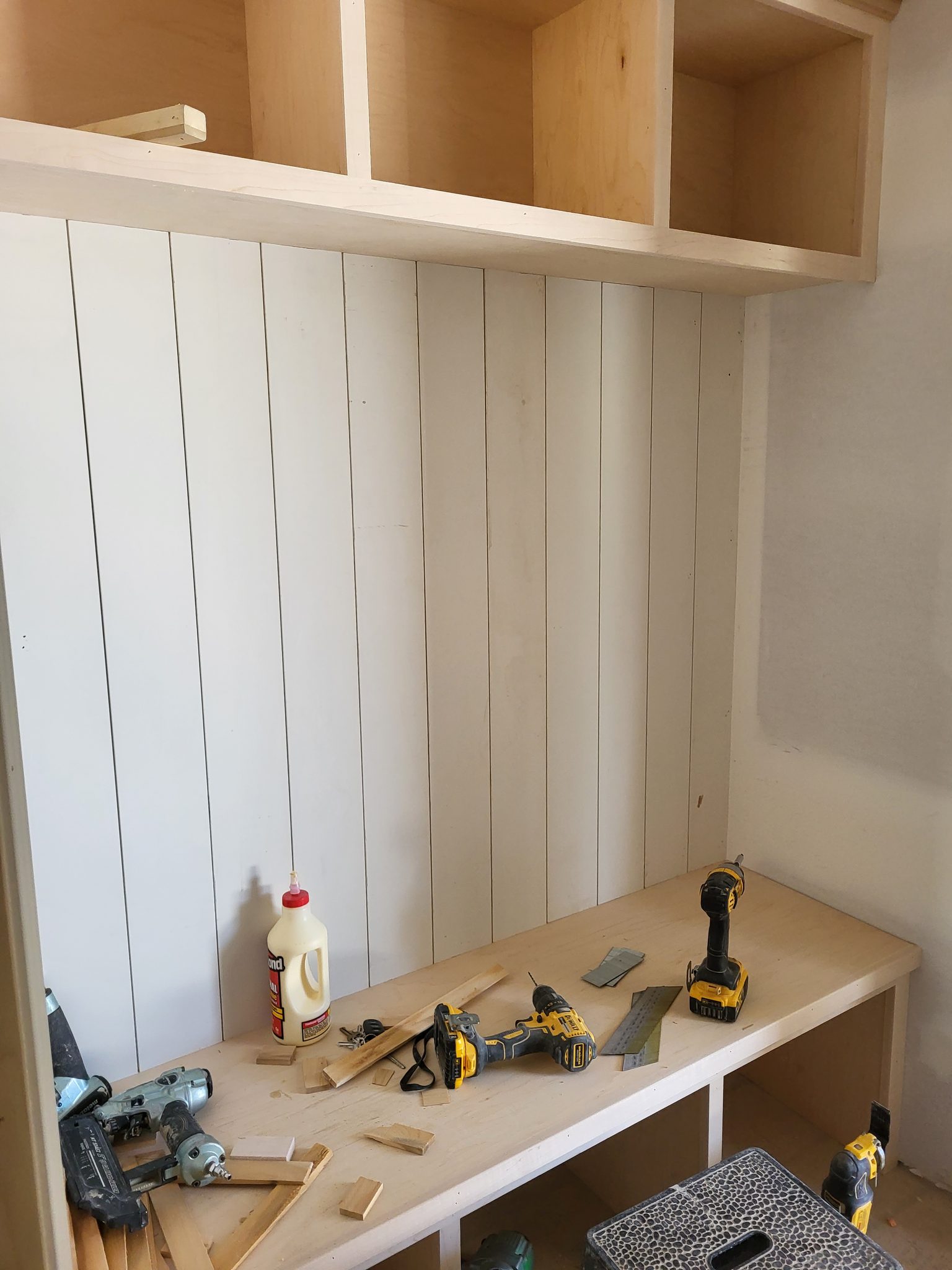
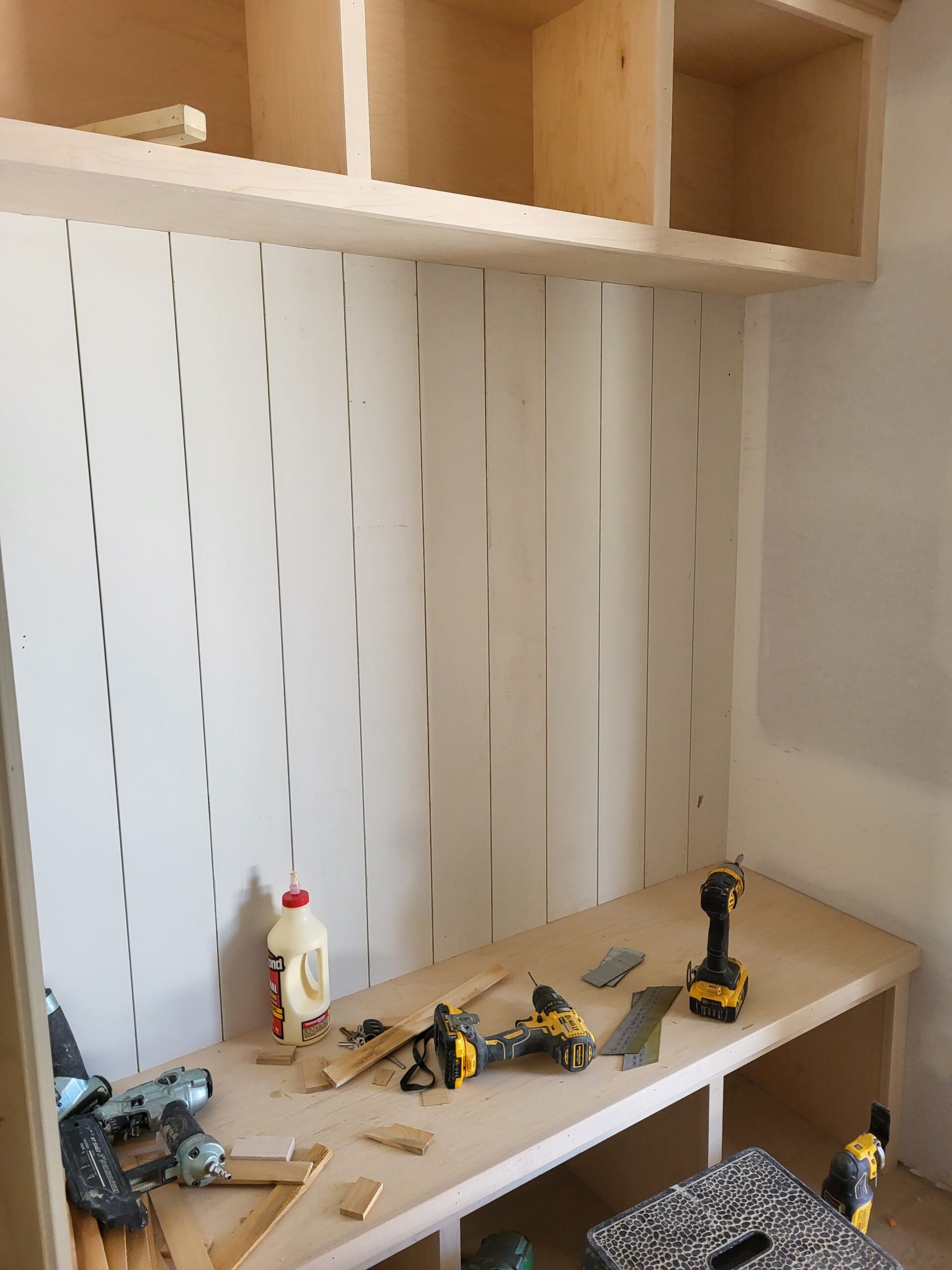
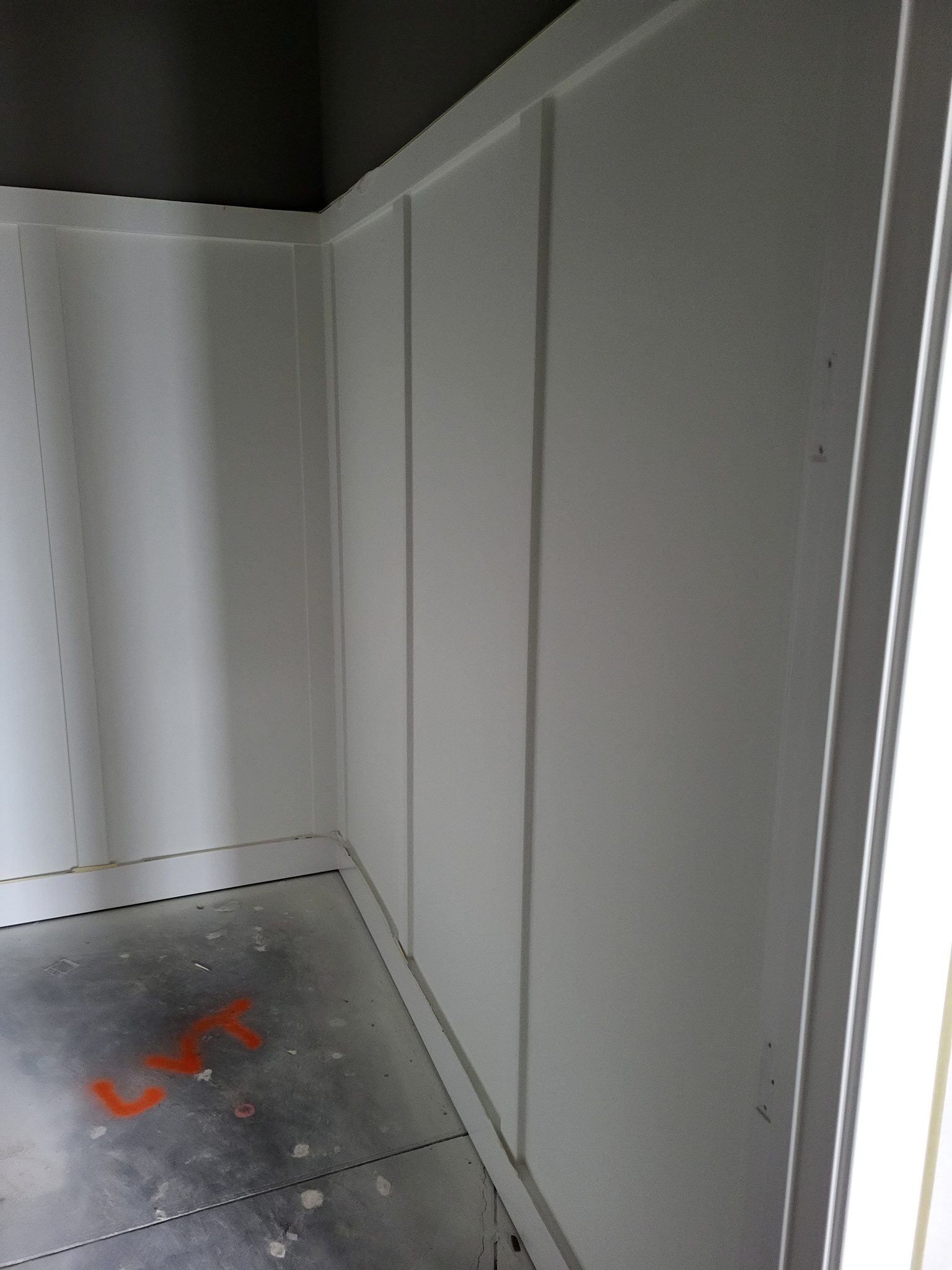
Vertical shiplap creates a board-and-batten feel that draws the eye upward, making rooms feel taller. It’s commonly used for wainscoting (lower half of a wall), accent walls, and bathroom walls. When you install shiplap vertically, the process is similar to horizontal but with one critical difference: since the boards run the same direction as the studs, you can’t reliably nail into studs. You need horizontal blocking or furring strips.
Step 1: Install Horizontal Blocking or Furring Strips #
Before any shiplap goes up, install horizontal 1×3 or 1×4 furring strips across the wall at 16-24″ intervals. Screw or nail each furring strip into every stud it crosses. These provide nailing surfaces for vertical boards. Place one strip at the top of the shiplap area, one at the bottom, and space the rest evenly in between.
Pro Tip: If you don’t want the added 3/4″ depth from furring strips showing at the wall edges, rip 1/4″ plywood strips and use those instead. Or, if the wall is open during construction, install solid 2x blocking between studs before drywall goes up — this is the cleanest solution in new builds.
📷 Photo Needed
Install Horizontal Blocking or Furring Strips — showing the key action and what the result should look like
Step 2: Plan the Layout and Start at One Side #
Measure the wall width and calculate the number of board exposures. Plan for equal-width boards on both the left and right edges — same concept as horizontal but rotated 90°. Start from one corner with a perfectly plumb first board. Use a level (or plumb bob) to verify plumb, not the corner of the wall — corners are rarely perfectly plumb.
📷 Photo Needed
Plan the Layout and Start at One Side — showing the key action and what the result should look like
Step 3: Work Across the Wall #
Engage the lap joint, use spacers for consistent reveals, and nail into each furring strip. For boards taller than 8 feet, you’ll need to join boards end-to-end — stagger these joints across the wall so they don’t form a visible horizontal line. Check for plumb every 4-5 boards and make gradual corrections.
Pro Tip: Vertical boards are more visible at eye level than horizontal ones. Be extra selective about board quality — set aside any warped, bowed, or discolored boards for areas hidden behind furniture or use them for cutoff pieces.
📷 Photo Needed
Work Across the Wall — showing the key action and what the result should look like
📷 Photo Needed
How to Install Shiplap Vertically — photo illustrating this section
How to Install Shiplap in a Herringbone Pattern #
Herringbone creates a sophisticated woven pattern where boards are laid at 45° angles, alternating direction row by row so they meet at 90° angles. The pattern looks like a zigzag or the skeleton of a herring fish (hence the name). Learning to install shiplap in a herringbone pattern is a significant step up in difficulty from horizontal or vertical.
Step 1: Install a Plywood Backer #
Herringbone boards run at 45° to the studs, so you can’t reliably nail into framing. Install 1/2″ plywood over the existing drywall (or over studs in new construction), screwing into every stud. This gives you a solid nailing surface across the entire wall. The plywood adds 1/2″ to the wall depth — plan for outlet box extenders.
📷 Photo Needed
Install a Plywood Backer — showing the key action and what the result should look like
Step 2: Snap the Layout Lines #
The key to herringbone is the center line. Snap a perfectly plumb vertical line down the center of the wall — this is where the zigzag pattern hinges. Then snap 45° reference lines from this center. All boards on the left side angle one direction, all boards on the right angle the opposite direction, meeting at the center line.
Pro Tip: Draw the full pattern on the plywood backer with chalk before cutting any boards. This lets you see the finished layout and catch any math errors before you start cutting material. Measure board widths along the layout to verify you won’t end up with thin slivers at the edges.
📷 Photo Needed
Snap the Layout Lines — showing the key action and what the result should look like
Step 3: Start at the Center and Work Outward #
Begin at the center line at the bottom of the wall. Cut the first board at a 45° angle on one end (the end that meets the center line) and square on the other end (or whatever length fills to the wall edge — you’ll trim the wall-edge boards later). Place the first board along your layout line, glue the back with construction adhesive, and nail with 18-gauge brads.
Place the next board on the opposite side of the center line, angled in the opposite direction. These two boards form the first “V” of the herringbone. Continue alternating sides, working upward. Each new board’s end should meet the previous board’s side at the center line, creating the woven zigzag pattern.
📷 Photo Needed
Start at the Center and Work Outward — showing the key action and what the result should look like
Step 4: Trim the Edges #
Where boards meet the ceiling, floor, and side walls, they’ll extend past the wall boundary at 45° angles. Snap a chalk line along the wall edge and cut all protruding boards flush using a circular saw with a guide, or mark and cut each board individually. Install trim pieces (baseboard, crown, side casing) to cover the raw edges.
Pro Tip: Don’t try to pre-cut the edge boards to exact length. Install them long (extending past the wall boundary) and trim them all at once with a straight edge. This is faster and gives a much cleaner line than trying to measure and cut each edge board individually.
📷 Photo Needed
Trim the Edges — showing the key action and what the result should look like
📷 Photo Needed
How to Install Shiplap in a Herringbone Pattern — photo illustrating this section
How to Install Shiplap in a Chevron Pattern #
Chevron creates a bold V-pattern where boards meet at a center line pointing upward (or downward). Unlike herringbone where boards meet at 90° angles, chevron boards are cut with matching angles on BOTH ends so they create clean V-shapes. This is the most demanding way to install shiplap and requires precise, consistent angle cuts.
Step 1: Install Plywood Backer and Snap Center Line #
Same as herringbone — install 1/2″ plywood backer and snap a perfectly plumb center line. The center line is even more critical for chevron because both board ends meet here, creating a continuous V-seam that’s highly visible. If the center line is off, every single V will be crooked.
📷 Photo Needed
Install Plywood Backer and Snap Center Line — showing the key action and what the result should look like
Step 2: Set Your Miter Saw Angle #
For a classic chevron, boards are typically cut at 45° (creating a 90° V-point). However, you can also use steeper or shallower angles for different effects — 30° creates a wider, more relaxed V, while 60° creates a narrow, dramatic arrow shape. Whatever angle you choose, it must be IDENTICAL on every single cut. Test your saw angle on scrap pieces first — cut two boards, flip one, and check the joint at the center line. Any angle error doubles at the joint.
Pro Tip: Cut 5-6 test pairs from scrap before touching your good material. Check each pair at the center line for a tight, gap-free joint. If your saw’s 45° stop is slightly off (very common on less expensive saws), adjust with the fine-tuning knob until test pieces meet perfectly. Once dialed in, do NOT move the angle for the rest of the project.
📷 Photo Needed
Set Your Miter Saw Angle — showing the key action and what the result should look like
Step 3: Cut Matching Pairs #
Unlike herringbone (where each board gets one angle cut), chevron boards are cut on BOTH ends at complementary angles. For each row, you need a LEFT board and a RIGHT board that mirror each other. The center-line end of each board gets the angled cut; the wall-edge end gets cut long and trimmed later (or measured to fit). Cut boards in matching left/right pairs to ensure consistency.
📷 Photo Needed
Cut Matching Pairs — showing the key action and what the result should look like
Step 4: Work from Bottom Center Upward #
Start at the bottom center of the wall. Place the first pair (left and right boards) meeting at the center line to form the first V. Apply construction adhesive to the back of each board, press into position, and nail. Use spacers between courses for consistent reveals. Each subsequent row’s V sits directly above the previous one, creating the chevron run. Keep checking that the center seam stays tight and plumb as you work upward.
Pro Tip: Apply wood glue to the center seam joint where the left and right boards meet. This keeps the V-joints tight over time as the wood moves seasonally. A visible gap running down the center seam ruins the entire chevron effect.
📷 Photo Needed
Work from Bottom Center Upward — showing the key action and what the result should look like
Step 5: Trim Edges and Finish #
Same approach as herringbone — trim protruding board ends at the wall edges using a straight edge guide. The side edges, top, and bottom all get trimmed flush and covered with trim molding.
📷 Photo Needed
Trim Edges and Finish — showing the key action and what the result should look like
📷 Photo Needed
How to Install Shiplap in a Chevron Pattern — photo illustrating this section
Finishing Details After You Install Shiplap #
Regardless of the pattern you chose, the finishing steps are the same:
- Fill nail holes with color-matched wood filler. Sand smooth when dry.
- Caulk all edges where shiplap meets adjacent walls, ceiling, and baseboard. Use painter’s caulk for paintable surfaces, clear silicone for bathrooms.
- Touch up paint/stain at filled holes, cut ends, and any scuff marks from installation.
- Install trim — baseboard at the bottom, crown or flat stock at the ceiling, and edge trim at side walls where the shiplap terminates.
- Install outlet/switch plate covers after all finishing is done. Use oversized covers if the cutouts aren’t perfectly clean.
📷 Photo Needed
Finishing Details After You Install Shiplap — photo illustrating this section
Quality Check After You Install Shiplap #
All Orientations #
- ✅ Reveals consistent throughout (same spacing between every board)
- ✅ Boards tight to each other at lap joints
- ✅ Nail holes filled and sanded smooth
- ✅ Caulk lines clean at all edges
- ✅ No warped or bowed boards visible
- ✅ Outlet/switch cutouts clean and covered by plates
- ✅ Paint/stain finish consistent with no missed spots
Horizontal Specific #
- ✅ All courses level across full length
- ✅ End joints staggered (no two adjacent rows with joints aligned)
- ✅ Top and bottom rows are equal width (or close to it)
Vertical Specific #
- ✅ All boards plumb
- ✅ Left and right edge boards are equal width
- ✅ End joints (if any) are staggered horizontally
- ✅ Furring strips fully concealed behind boards
Herringbone Specific #
- ✅ Center zigzag seam is consistent top to bottom
- ✅ All 45° angles are consistent (no visible variation between boards)
- ✅ Edge trim covers raw board ends cleanly
- ✅ Pattern reads as intentionally woven, not random
Chevron Specific #
- ✅ Center V-seam is tight with no gaps (most critical check)
- ✅ V-points are vertically aligned top to bottom
- ✅ Left and right boards match in width and angle
- ✅ Pattern is symmetrical from the center line
📷 Photo Needed
Completed install shiplap — close-up detail shots showing quality criteria being met
Troubleshooting #
Even when working carefully, problems can arise. Here are the most common issues and how to fix them.
Boards are bowing/not lying flat #
The wall surface is uneven. For horizontal/vertical, add shims behind the board at low spots, or screw through the board into studs to pull it tight (fill the screw hole). For herringbone/chevron on plywood, the plywood itself may need shimming before board installation. Construction adhesive can help bridge minor irregularities.
Reveals getting wider or narrower #
Boards may vary in width from piece to piece. Re-establish level (or plumb for vertical) every 4-5 rows and adjust spacing to compensate. Small adjustments spread across several rows are invisible — one large correction on a single row is obvious.
End joints opening up #
Boards are shrinking due to humidity changes. The material was likely not properly acclimated — boards should sit in the room for at least 48 hours before cutting. For installed boards with gaps, fill with color-matched caulk or accept small gaps as “character” in a painted finish.
Board splits when nailing near the end #
Pre-drill a pilot hole before nailing within 2″ of any board end, or use a shorter brad nail. This is especially common in hardwood and dry material. For herringbone/chevron, nearly every board has angled cuts at the ends — pre-drilling is worth the extra minutes.
Last row is a thin sliver #
This happens without planning the layout first. For horizontal, remove the bottom course, rip it thinner, and redistribute the height difference so both top and bottom rows look intentional. For vertical, do the same with the first and last columns. This is why layout planning before cutting is non-negotiable.
Herringbone/chevron pattern drifting off center #
The center line wasn’t truly plumb, or small errors compounded over multiple rows. Stop immediately — every row installed while the pattern is drifting makes it worse. Re-snap the center line, check it with a plumb bob (more accurate than a level over long distances), and correct course. It may require removing a few rows to re-establish the pattern.
Chevron V-joints have gaps at the center seam #
Your miter angle is slightly off. Even 0.5° of error creates a visible gap at the V-point. Re-calibrate your miter saw using test cuts on scrap. If you can’t get the saw dialed in precisely, consider investing in a quality combination square or digital angle gauge to verify the saw’s actual cutting angle versus its readout. For boards already installed with gaps, fill with wood filler or color-matched caulk.
Vertical boards won’t hold — nails pulling out #
Boards are nailing into drywall only, not into furring strips or studs. Vertical boards run parallel to studs and won’t hit them consistently. You must add horizontal furring strips or blocking. If furring strips were installed but nails are still pulling, the strips themselves may not be secured into studs — re-fasten the furring strips with screws into every stud they cross.
Related Guides #
For additional inspiration and techniques, see this This Old House guide on shiplap installation.
- Size Supplements:
- How to Install Shiplap 2, 7′ to 14′ — Joint management and stagger planning for mid-range walls
- How to Install Shiplap 3, 14’+ — Scaffolding and multi-joint planning for great rooms
- Orientation Supplement:
- How to Install Shiplap 4, Ceiling — Overhead installation techniques and gravity challenges
- Fireplace Guides:
- How to Install Shiplap on a 3-Sided Fireplace Under 10′ — Mitered corners and heat clearance
- Shiplap Fireplace Wrap 10′-15′ — Mantel integration and extended miters
- Shiplap Fireplace Wrap Above 15′ — Grand-scale surrounds with full scaffolding
- General:
- Finish Trim Carpentry Guidelines
- How to Trim a House
- Essential Carpenter Hand Tools